A man walks into a workshop carrying a perfectly polished hammer.
He sets it down on the table and says, “I’ve spent years mastering this tool. I’m ready for work.”
The shop owner looks at him and replies, “Great… what problem do you solve?”
The man pauses.
“I… build things.”
“What kind of things?”
“Anything.”
The shop owner smiles politely. “Come back when you know what someone actually needs built.”
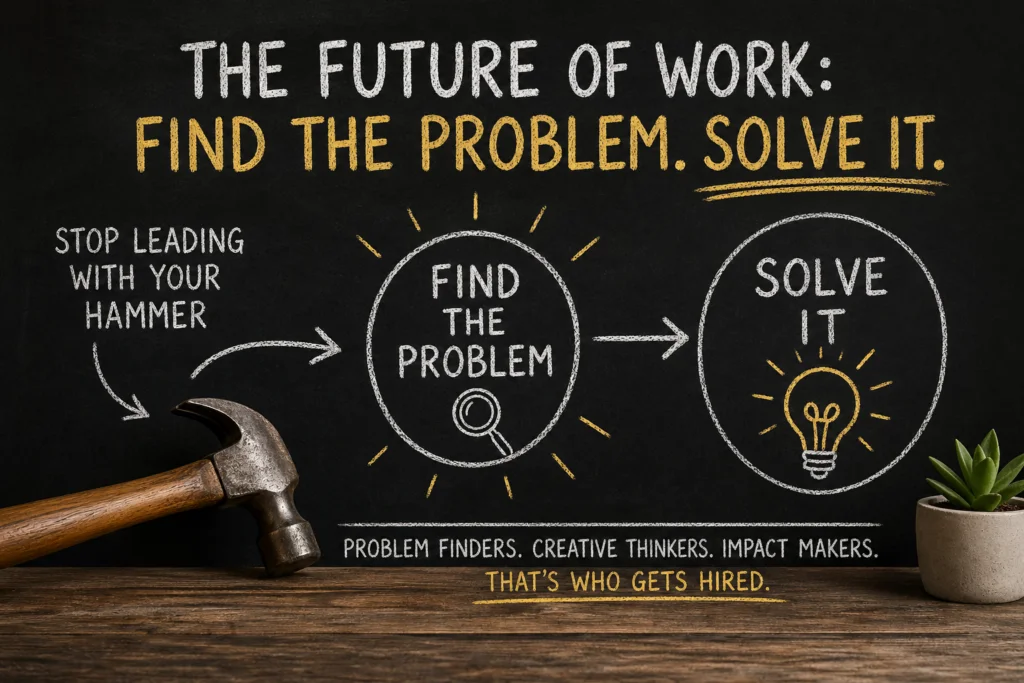
We’ve spent years focusing on the hammer.
Degrees. Certifications. Skills. Titles.
Then we step into the job market and wonder why it feels like no one is listening.
Here’s the shift that’s happening right now.
Work is organizing around problems, not roles.
Companies are not sitting around refining job descriptions. They are dealing with pressure. Missed targets. Inefficiencies. Growth goals. Technology they do not fully understand. Teams that are stretched thin.
They are looking for relief.
When you understand that, everything about your job search starts to change.
The New Question You Need to Answer
It is no longer enough to say, “Here’s what I’ve done.”
You need to answer a different question.
“What problems do I solve?”
And even more importantly,
“Which problems do I want to be known for solving?”
Because the candidates who stand out right now are the ones who make that connection obvious.
This is why the job search feels heavier than it used to. It requires tenacity, creativity, skill, and empathy all at once . You are not just applying. You are translating your experience into relevance.
Start Thinking Like a Problem Finder
Most people wait for problems to be handed to them in a job description.
That is too late.
The real opportunity is earlier than that.
Look for friction:
- Where are things slowing down?
- Where are people frustrated?
- What keeps coming up in meetings or online conversations?
Those patterns tell you where value is needed.
If you can name the problem clearly, you are already ahead of most candidates.
If you can speak to how you would approach solving it, you are in a different category entirely.
Your Resume Needs a New Job
Your resume is not a history lesson.
It is a highlight reel of problems you have solved.
Every bullet point should answer some version of:
- What was the issue?
- What did I do?
- What changed because of it?
This is why tailoring matters so much. When you put yourself in the recruiter’s shoes and align your content with what they actually need, your resume starts to feel obvious to them .
Clear. Relevant. Easy to say yes to.
A Few Other Shifts You Can’t Ignore
The future of work is not just about problem-solving. A few other patterns are shaping how careers unfold.
Your network is your safety net
Opportunities are moving through conversations.
The people who engage, contribute, and build relationships are the ones who hear about roles before they are posted.
Providing value in those interactions is what gets you remembered .
Careers are becoming more fluid
Linear paths are giving way to layered ones.
Different roles, industries, and skill sets build a wider lens. That lens makes you better at identifying and solving complex problems.
Learning is ongoing
The pace of change is not slowing down.
The advantage goes to the person who can pick up new concepts quickly and apply them in real situations.
Your online presence is part of your reputation
People will look you up.
What they find should reinforce the kind of problems you solve and how you think.
Otherwise, it is like showing up a little unprepared, a little unclear. Digital bed-head is real .
What This Means for You
If you take one thing from this, let it be this:
Stop waiting for the perfect role to appear.
Start positioning yourself around the problems you solve.
That looks like:
- Getting specific about your strengths
- Paying attention to what companies actually struggle with
- Speaking in outcomes instead of tasks
- Starting conversations where you can contribute insight
- Staying curious about how things could be better
The man with the hammer came back a week later.
This time, he said,
“I help small businesses reduce construction costs without sacrificing quality.”
The shop owner did not need to ask another question.
“Can you start Monday?”
If you are ready to get clear on the problems you solve and communicate that in a way that gets attention, I can help.
I’m Kyla Duffy, career coach and resume writer. I’ve helped thousands of people land roles that fit who they are and where they are going.
You can learn more or work with me here:
https://kyladuffy.com