A phone or video screening interview is typically a shorter, earlier-stage conversation, often with a recruiter rather than the hiring manager, focused on basic fit, logistics, and whether you’re worth moving forward to a longer interview. It calls for a different kind of preparation than a final-round interview tighter, more efficient answers, and comfort communicating without the in-person cues you’d normally rely on.
What a Screening Interview Actually Is
A screening interview is usually the first real conversation in a hiring process, often 20-30 minutes, and often conducted by a recruiter rather than the person who would be your manager. The priorities at this stage tend to differ from later rounds recruiters and hiring managers are frequently screening for different things, and a recruiter screen is often more focused on basic qualifications, salary expectations, availability, and general communication fit than deep technical evaluation.
Understanding this changes how you should prepare. You’re not trying to have the most impressive, detailed conversation possible you’re trying to clearly and efficiently demonstrate that you’re worth a longer conversation with the actual hiring team.
A Realistic Example
Imagine a candidate who prepared thoroughly for what she assumed would be a deep, technical conversation detailed project walkthroughs, several full-length behavioral stories, a prepared list of technical questions to ask back.
The actual call was a 20-minute recruiter screen. She spent the first eight minutes on a single, overly detailed answer to “walk me through your background,” leaving the recruiter unable to get through half of the questions on their list, including the salary and availability questions they needed answered to move her forward. Despite a strong background, the recruiter’s internal note was that she seemed unable to communicate concisely not because of anything she said, but because of how much time it took her to say it.
The fix wasn’t a different answer. It was a shorter one, with room left for the recruiter to actually run their process.
How to Prepare Differently for This Stage
Keep Answers Tighter
A 20-minute screen doesn’t have room for the same depth as a 45-minute interview. Practice giving concise versions of your key stories 30-60 seconds, not three minutes while still keeping the core evidence intact.
Know Your Resume Fluidly
Recruiters often ask questions directly off your resume, and hesitating over your own timeline or responsibilities can raise unnecessary doubt. Make sure you can discuss your own resume smoothly, including any gaps or transitions, without needing to think hard about your own history.
Prepare for Logistics Questions
Salary expectations, availability, willingness to relocate or work a specific schedule these come up frequently at this stage. Think through your answers in advance rather than improvising them for the first time live.
Phone-Specific Tips
- Take the call somewhere quiet, with strong reception, ideally not while walking outside or in a car.
- Stand up or smile while talking it genuinely affects how energetic and engaged your voice sounds, even though no one can see you.
- Keep your resume, the job description, and any notes visibly in front of you nobody can see you referencing them, so use that advantage.
- Have a glass of water nearby and take a breath before answering if you need a beat to think.
Video-Specific Tips
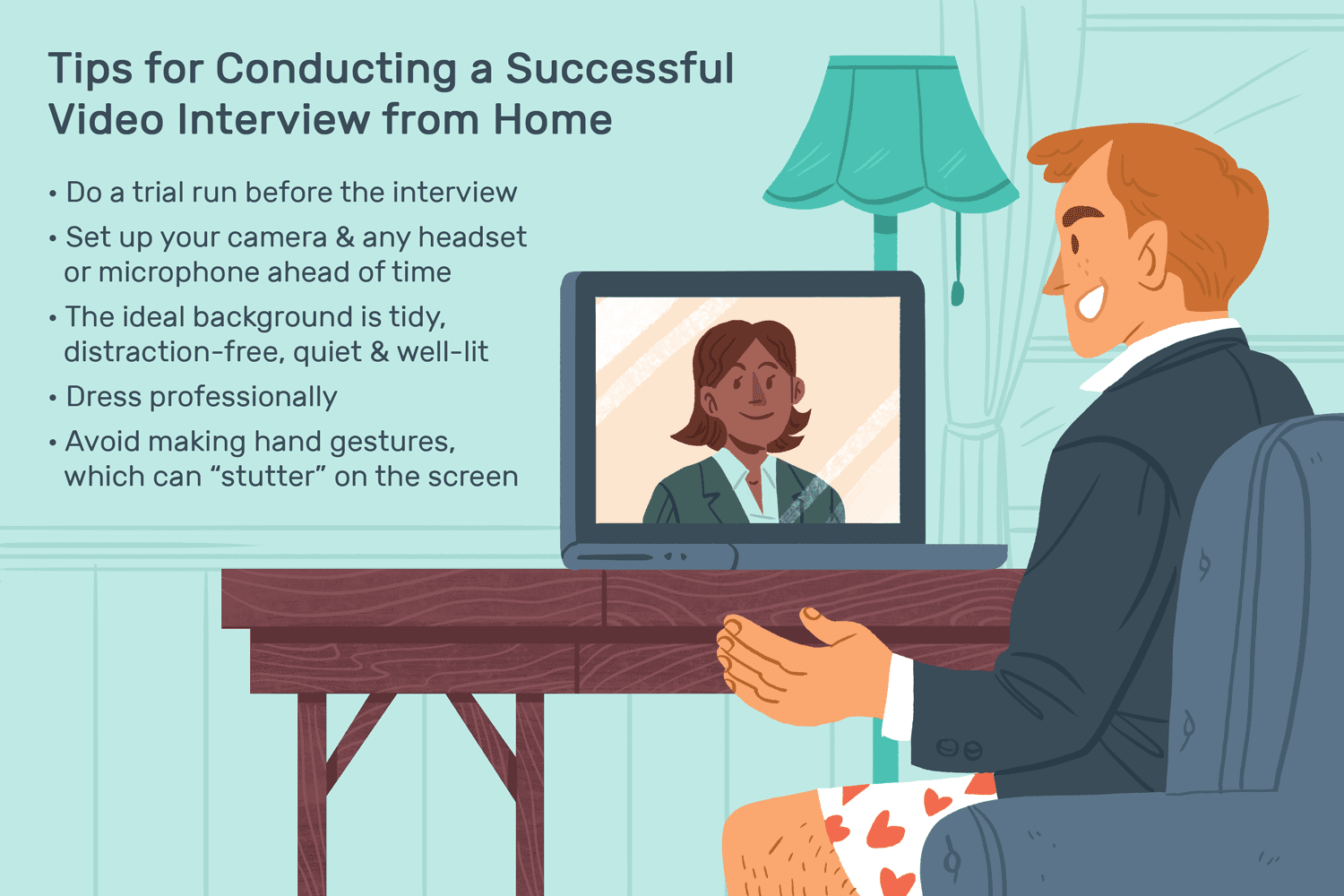
Video screens add a visual layer worth preparing for separately. See how to dress and prepare for a virtual interview for the details on camera angle, lighting, and appearance. And for a cautionary example of what happens when the technical side fails mid-conversation, a Zoom interview that went sideways is worth a read before your own call.
A few additions specific to the screening stage: test your camera and audio before the call, not during it. Keep notes just outside the camera frame rather than directly in front of your face, where glancing down repeatedly is more noticeable than on a phone call. Close other applications and notifications that might interrupt or distract.
Common Mistakes at This Stage
- Treating it too casually because it “doesn’t count as much” as a final interview recruiters can and do screen people out at this stage.
- Giving answers so long the recruiter can’t get through their planned questions in the allotted time.
- Not having a clear, confident answer ready for salary expectations, and either underselling yourself or seeming evasive.
- Forgetting that this actually is an interview, and coming across as too relaxed or under-prepared as a result.
Questions Recruiters Typically Ask at This Stage
- Walk me through your resume / your background.
- Why are you interested in this role?
- What are your salary expectations?
- What’s your availability or timeline?
- Do you have any scheduling constraints or upcoming commitments?
These are usually more straightforward than the harder behavioral questions covered later in a process the kind addressed in how to answer the interview questions everyone hates, which are more common in subsequent rounds.
Phone vs. Video Screens: Key Differences
| Phone | Video | |
| Notes | Fully visible, use freely | Keep just outside camera view |
| Appearance | Not a factor | Dress and background both matter |
| Technical prep | Just reception and a quiet space | Camera, audio, lighting, and platform all need testing |
| Energy delivery | Entirely through voice | Voice plus visible expression and body language |
How to Transition From Screen to Next Round
End the call by asking about next steps directly timeline, who you’d meet with next, and format. This is also a reasonable moment to briefly reinforce your interest, without repeating your entire pitch. A clean, professional close matters here just as much as the content of your answers.
Setting Up Your Environment in Advance
A surprising number of screening interviews go sideways for reasons that have nothing to do with the actual answers. Confirm the exact time zone if the call is being scheduled across regions this single detail causes more missed or awkwardly-rushed screens than almost anything else. Silence notifications on every device in the room, not just your phone, since a buzzing laptop or smartwatch is distracting even during an audio-only call. If you’re taking the call somewhere unfamiliar, arrive or set up at least ten minutes early to account for anything unexpected, rather than dialing in at the exact start time.
How Coaching Helps With This Stage Specifically
Screening interviews are often overlooked in interview preparation, since people tend to focus their energy on the “real” interview later in the process. But this stage still eliminates candidates, and the same evidence-based approach behind stronger interview coaching applies here too just compressed into tighter, more efficient answers appropriate for a shorter conversation.
If you have a screening call coming up and want to walk in ready, my job interview coaching services can help you prepare specifically for this format, not just the later rounds.
Why This Actually Matters
This isn’t a minor formality. SHRM, the leading professional association for HR and talent-acquisition practitioners, has long emphasized that recruiter screens serve a real gatekeeping function in the hiring process, meaning underestimating this stage carries genuine risk of being screened out before a hiring manager ever sees your candidacy.
General guidance from Indeed’s Career Guide reinforces that concise, well-prepared answers perform better at every interview stage, including this earlier, shorter one.
And given how competitive many roles remain, per data regularly published by the U.S. Bureau of Labor Statistics, treating the screening stage seriously rather than casually is one of the more overlooked ways candidates can protect their chances early in a process.
Frequently Asked Questions
How long should my answers be in a screening interview?
Generally 30-60 seconds per question, tighter than you’d use in a longer, later-round interview. If a recruiter wants more detail, they’ll ask a follow-up.
Should I ask about salary during the screen, or wait for them to bring it up?
It’s fine either way, but be ready to answer if asked. Having a realistic, confident range prepared in advance avoids an awkward pause or an answer that undersells you.
What if the recruiter asks something I don’t know how to answer?
It’s fine to ask for a moment to think, or to answer honestly that you’d need to look into something rather than guessing. This is a much smaller concern at the screening stage than in later, more technical rounds.
Is it okay to have notes in front of me during a phone screen?
Yes, this is one of the genuine advantages of a phone screen over video or in-person use it. Keep key points, your resume, and the job description visible.
Should I treat a video screen the same as a full video interview?
Mostly yes in terms of preparation (appearance, background, technical setup), but keep your actual answers as concise as you would for a phone screen, since the interview length and purpose are usually the same regardless of format.
What if my screening interview gets rescheduled or cut short?
This happens and usually isn’t a reflection on you. Follow up politely to confirm next steps, and use any extra time to prepare further rather than reading into the change.
Should I research the company as thoroughly for a screen as for a final interview?
Some research is still worth doing enough to answer “why this company” credibly but you don’t need the same depth you’d bring to a final round. Save the more exhaustive research for later stages, once you know you’re being seriously considered.
Can I record myself practicing for a screening call?
Yes, and it’s a genuinely useful way to check your pacing and energy level, particularly for phone screens where you can’t see yourself in the moment the way you might on video.
Ready to Prepare for What’s Actually Coming?
If you have a screening call on the calendar and want to walk in ready for exactly this format, that’s exactly what I help with. I’m Kyla Duffy, and my job interview coaching services prepare you for every stage, not just the final round. If you’re local, I work with clients throughout Denver and Boulder, in person or remotely. Curious what it costs? My rates are posted publicly, and my FAQ page covers what people usually ask first.