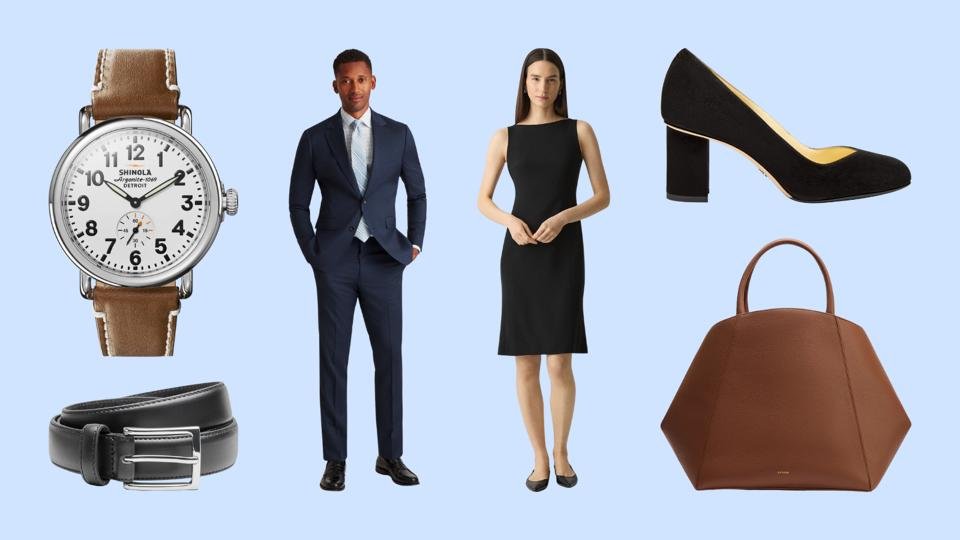
The safest general rule is to dress one level more formal than the company’s everyday dress code if you’re not sure what that is, business professional (a suit or equivalent polished, tailored attire) is a reliable default for most industries. What actually counts as appropriate varies significantly by industry, company culture, and role, so a little research goes a long way before you decide.
The General Rule: One Level Up
A useful default is to dress slightly more formally than what employees actually wear day to day at the company. If the office is business casual, lean toward business professional for the interview. If the office is already quite formal, match that level rather than trying to exceed it dramatically, which can occasionally read as overcompensating.
A Realistic Example
Imagine two candidates interviewing for similar marketing roles at two different companies on the same day.
The first is interviewing at an established financial services firm and shows up in jeans and a casual top, having assumed “marketing is creative, so it’s probably casual everywhere.” The interviewer, dressed in business professional attire, notices immediately, and it colors the rest of the conversation, fairly or not.
The second is interviewing at an early-stage tech startup and shows up in a full formal suit, having assumed all corporate interviews require it. The team, dressed casually themselves, finds the formality slightly stiff and mismatched with how they actually work day to day.
Neither candidate was dressed “wrong” in an absolute sense both were dressed for a company that wasn’t the one interviewing them. A few minutes of research into each specific employer’s actual culture would have prevented both mismatches.
How to Figure Out a Company’s Actual Dress Code
- Check the company’s LinkedIn and social media for photos of employees or office events.
- Look at employee reviews on sites like Glassdoor, which sometimes mention dress culture directly.
- Ask the recruiter or scheduler directly “Is there a particular dress code I should be aware of?” is a completely normal, appropriate question.
- Consider the industry’s general norms as a starting point, then adjust based on anything more specific you learn.
General Guidelines by Industry and Company Type
| Industry / Company Type | Typical Interview Attire |
| Finance, law, consulting | Business professional a suit or equivalent polished, tailored attire |
| Corporate / traditional office | Business professional to business casual, depending on seniority of the role |
| Tech / startups | Business casual is often plenty; a full suit can occasionally feel mismatched to casual office cultures |
| Creative fields (design, media) | Business casual with room for personal style and polish |
| Healthcare | Business professional or business casual, clean and conservative |
| Retail / hospitality | Business casual, neat and approachable rather than overly formal |
Treat this as a starting point, not a rule always verify against the specific company where you can, since culture varies even within the same industry.
Building an Interview Wardrobe Without Overspending
A single well-fitted, versatile outfit neutral-colored separates that can be mixed and matched covers most interview situations without requiring a large wardrobe investment. Fit matters more than cost: an inexpensive piece that’s properly tailored will look more polished than an expensive one that doesn’t fit well. Many dry cleaners and tailors offer basic alterations affordably, and a $15-20 adjustment can meaningfully improve how a $40 outfit looks and feels.
If you’re interviewing frequently during an active search, having two complete outfits in rotation avoids both obvious repetition in a multi-round process and the stress of laundry timing.
Practical Basics, Regardless of Style
Business Professional Basics
A well-fitted suit or tailored separates, in a neutral or dark color, paired with polished, closed-toe shoes. Minimal, well-maintained accessories. The goal is a clean, put-together silhouette, not a specific brand or price point.
Business Casual Basics
Tailored trousers or a skirt, a collared shirt, blouse, or clean sweater, and a blazer or cardigan as an optional layer. Avoid anything that reads as too casual for an office heavy denim, graphic prints, or athletic wear generally don’t fit even a relaxed business casual bar.
What Not to Wear
- Anything wrinkled, stained, or visibly worn condition matters more than the specific item.
- Strong fragrance, which can be distracting or, for some interviewers, genuinely bothersome.
- Overly casual footwear like sneakers or flip-flops, unless you’ve confirmed the culture genuinely supports it.
- Clothing so new you haven’t tested how it fits or moves discomfort shows.
- Anything you’ll be tempted to fidget with throughout the interview.
Virtual Interview Dress Considerations
Video interviews have their own specific considerations camera-friendly colors, what’s visible in frame, lighting interactions with certain fabrics. I’ve covered that in detail in how to dress to impress for a virtual job interview, which pairs well with the general guidance here. And if your video interview is also a screening call specifically, how to prepare for a phone or video screen covers the format-specific logistics beyond just appearance.
One principle worth repeating regardless of format: dress fully, not just from the waist up. Beyond the risk of an unexpected stand-up moment on camera, dressing completely tends to affect how confident and prepared you feel overall.
Grooming and Details That Matter
- Clean, tidy hair and grooming appropriate to your personal style, not a dramatic change from your everyday look.
- Trimmed, clean nails.
- A quick check in a mirror before you leave (or before the call starts) for anything obviously out of place.
- Comfortable enough that you’re not distracted by your own clothing during the conversation.
Common Mistakes
- Assuming casual company culture means casual interview attire the interview itself often calls for slightly more polish than daily office wear, even at relaxed companies.
- Overdressing so dramatically it creates a mismatch with the actual culture, which can occasionally read as not having done any research.
- Waiting until the last minute to decide, then wearing something untested or uncomfortable.
- Focusing entirely on clothing while neglecting basic grooming details that are equally visible.
How This Fits Into Your Broader Interview Preparation
What you wear is one detail among many, and it shouldn’t overshadow the substance of your preparation. If you’re working on the content of your interview answers as well, what an interview coach actually does covers the strategy side dress is worth getting right, but it won’t substitute for strong, evidence-based answers underneath it.
Why This Actually Matters
First impressions genuinely factor into hiring decisions. SHRM, the leading professional association for HR and talent-acquisition practitioners, has noted that professional presentation remains part of how candidates are evaluated, even as workplace dress norms have relaxed generally over time.
General guidance from Indeed’s Career Guide reinforces researching a specific company’s culture rather than relying on generic industry assumptions, since dress norms increasingly vary even within the same field.
And workplace norms do shift over time the U.S. Bureau of Labor Statistics tracks employment trends across industries broadly, which is part of why relying on outdated, generic assumptions about “what this industry wears” is less reliable than it used to be.
Frequently Asked Questions
Is it ever okay to ask what to wear before an interview?
Yes, directly asking the recruiter or scheduler is completely normal and often the most reliable way to know for certain, rather than guessing.
What if I genuinely can’t tell the company’s dress code from research?
Default to business professional. It’s rarely seen as excessive, and it’s a safer choice than guessing casual and being wrong.
Does it matter what I wear if the interview is entirely over the phone?
Less directly, since no one can see you, but many people find that dressing at least somewhat professionally still affects their mindset and confidence during the call.
Should I dress differently for a second or final interview than the first?
Generally maintain the same level of formality throughout the process, unless you’ve learned something specific that suggests otherwise, like meeting a more senior panel or visiting a different part of the office.
Are visible tattoos or piercings a concern for interview attire?
This varies significantly by industry and specific company culture. If you’re unsure, research the company’s actual employees for context rather than assuming based on general industry stereotypes.
What if my personal style doesn’t match traditional interview norms?
There’s usually room to incorporate authentic personal style within a professional interview outfit it doesn’t have to mean abandoning your identity entirely, just calibrating polish and formality appropriately for the specific context.
Should I wear the same outfit to every round of a multi-stage interview process?
It’s fine to repeat an outfit across rounds, particularly if they’re spread out over time. If multiple rounds happen close together or on the same day, having a second option avoids obvious repetition, though it’s a minor consideration compared to the substance of each conversation.
Is it worth buying new clothes specifically for one interview?
Only if you don’t already have something appropriate. A well-fitted, versatile piece is a reasonable investment if you’re job searching actively and will likely interview multiple times, but there’s no need to buy something new for a single conversation if your existing wardrobe already covers it.
Want Help With the Bigger Picture Too?
Dressing well is one piece of walking into an interview prepared the content of your answers matters even more. I’m Kyla Duffy, and my job interview coaching services help with the substance behind the outfit. If you’re also updating your resume, my resume and cover letter writing services make sure the rest of your materials are just as strong. Curious what it costs? My rates are posted publicly, and my FAQ page covers what people usually ask first.