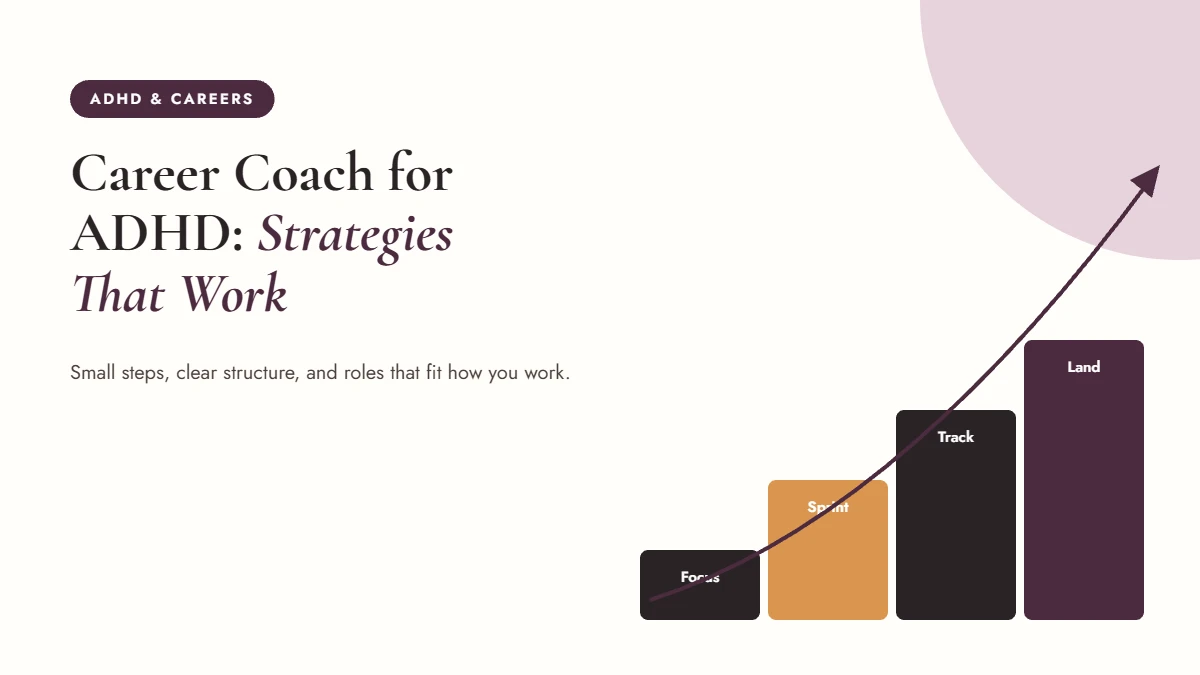
What helps when traditional job search advice (“spend eight hours a day applying!”) feels impossible? A career coach for ADHD helps you build a search that fits how your brain works. The strategies that tend to work best are structure, short focused sessions, simple tracking, and external accountability, plus choosing roles and environments that play to your strengths.
An important note: I’m a career coach, not a clinician. I don’t diagnose or treat ADHD. If you’re looking for medical or psychological support, please work with a qualified professional. Coaching can sit alongside that care.
Step 1: Define a Clear Target
An open-ended search is hard for anyone, and harder when focus is a challenge. Pick one or two target roles. Clarity reduces decisions, which saves energy.
If you’re unsure what direction fits, my guide to career coaching services explains how coaching helps you narrow it down.
Step 2: Work in Short Sprints
Try 25-minute blocks with a single task each: update one resume section, send three outreach messages, or research one company. Small wins add up quickly.
RULE: Make the next step so small it’s easy to start. Momentum beats motivation.
Step 3: Track Everything in One Place
A simple spreadsheet or board with applications, contacts, and follow-up dates keeps things from slipping. Here’s a creative follow-up strategy to add to it.
Step 4: Build Accountability
A coach, friend, or accountability partner who checks in weekly can make a big difference. That’s a core part of coaching; here’s what a career coach actually does.
If structure and follow-through are the hardest part of your search, book a free consultation and let’s design a plan that fits you.
Step 5: Play to Your Strengths
Many people with ADHD describe strengths like creativity, energy in a crisis, and quick problem-solving. Look for roles and environments that reward those. The Occupational Outlook Handbook is a good way to explore roles and what they involve.
Step 6: Make Your Materials Easy to Maintain
- Keep one master resume and tailor only the top third. My resume review checklist helps.
- Update LinkedIn once, well, with my LinkedIn checklist.
- Prepare a few flexible interview stories instead of memorized answers; here’s why to prepare proof, not answers.
Step 7: Protect Your Energy
A long search is draining. Short breaks and realistic weekly goals help. If the search is dragging on, read how to get a handle on an endless job search, and if you’re also burned out, see my guide on a career coach for burnout.
For more on career development, the National Career Development Association is a helpful resource, and Harvard Business Review’s career planning articles offer good perspective.
How I Coach
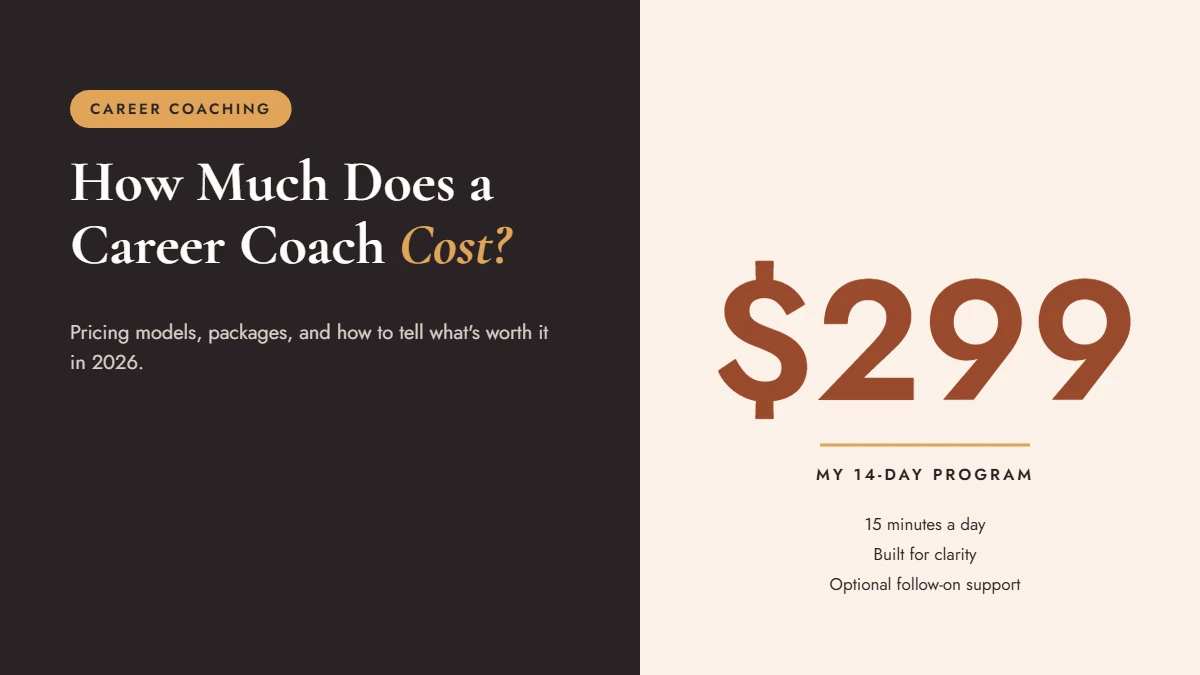
My career coaching starts with a 14-day “Find Your Path” challenge ($299) built around about 15 minutes a day, which suits short, focused sessions. See all options on my rates page.
Frequently Asked Questions
How can a career coach help someone with ADHD?
A career coach can help you create structure, break the job search into small steps, build accountability, and identify roles and environments that fit how you work. A coach doesn’t diagnose or treat ADHD.
What jobs are good for people with ADHD?
There’s no single answer. Many people do well in roles with variety, clear goals, quick feedback, or hands-on problem-solving, but the right fit depends on your strengths and interests.
Should I disclose ADHD to an employer?
That’s a personal decision. Some people disclose to request accommodations; others don’t. Consider talking with a qualified professional about your rights and options.
How do I stay focused during a job search?
Use short, timed work sessions, a simple tracker, and a weekly plan. Pair tasks with accountability, like a coach or a friend checking in.
The short version
- Pick a clear target and work in short sprints.
- Track everything in one place and build accountability.
- Choose roles that reward your strengths.
- Coaching complements, but doesn’t replace, professional care.
Build a Search That Works With You
You don’t need a job search designed for someone else’s brain. Book a free consultation, and let’s build one that fits how you work best.