A group interview is when an employer interviews several candidates for the same role at the same time, in the same room (or the same Zoom call). It’s not a mistake, and it’s not a trick it’s a deliberate format employers use to see how you think, communicate, and behave around other people, not just around them. If you’ve got one on your calendar, the short version is this: the goal isn’t to be the loudest person in the room. It’s to be the most useful one.
Now let’s get into what that actually looks like.
What Is a Group Interview? (And What Does It Actually Involve?)
A group interview is exactly what it sounds like on paper and a lot more nerve-wracking in person: you, several other candidates, and one or more interviewers, all in the same conversation at the same time.
Employers reach for this format for a few practical reasons mostly time and mostly information. If a company is hiring for multiple similar openings at once (think: a retail chain staffing up for the season, or a company running a large early-career hiring push), interviewing everyone one-on-one just doesn’t scale. According to the National Association of Colleges and Employers, group and panel formats show up especially often in campus recruiting and high-volume early-career hiring, where employers need to move through a lot of candidates efficiently while still getting a real read on soft skills.
But efficiency isn’t the only reason. Group interviews also let an employer see something a one-on-one interview genuinely can’t: how you behave when you’re not the center of attention. Do you listen? Do you build on what someone else said, or talk over them? Do you shrink, or do you find a way to contribute without hijacking the room? That’s information no amount of rehearsed STAR-method storytelling can fake. (Quick definition, since I use it constantly: the STAR method Situation, Task, Action, Result is a way of structuring an interview answer around a real example instead of a vague claim. It still matters in a group setting. You’ll just get less airtime to use it.)
Group Interview vs. One-on-One Interview: What Changes
| Traditional 1:1 Interview | Group Interview | |
| Time to make your case | 30–60 minutes, mostly yours | A few minutes, shared with others |
| What’s being evaluated | Your answers, your fit, your story | All of that, plus how you behave around other candidates |
| Biggest risk | Freezing up or rambling | Getting talked over, or talking over someone else |
| Best strategy | Depth go deep on a few strong stories | Precision say less, but make it land |
| What stands out most | A clear, specific answer | A candidate who makes the group look good |
That last row is the one people miss most often, so let’s spend some time there.
How Group Interviews Actually Work
There isn’t one single format “group interview” is really an umbrella term for a few different setups, and knowing which one you’re walking into changes how you should prepare.
The Panel-Style Group Interview
This is the most common version: one or two interviewers, several candidates, and a rotating set of questions. Everyone answers the same question, often in turn, sometimes popcorn-style (interviewer picks who answers next, in no particular order which is its own kind of stress test, frankly).
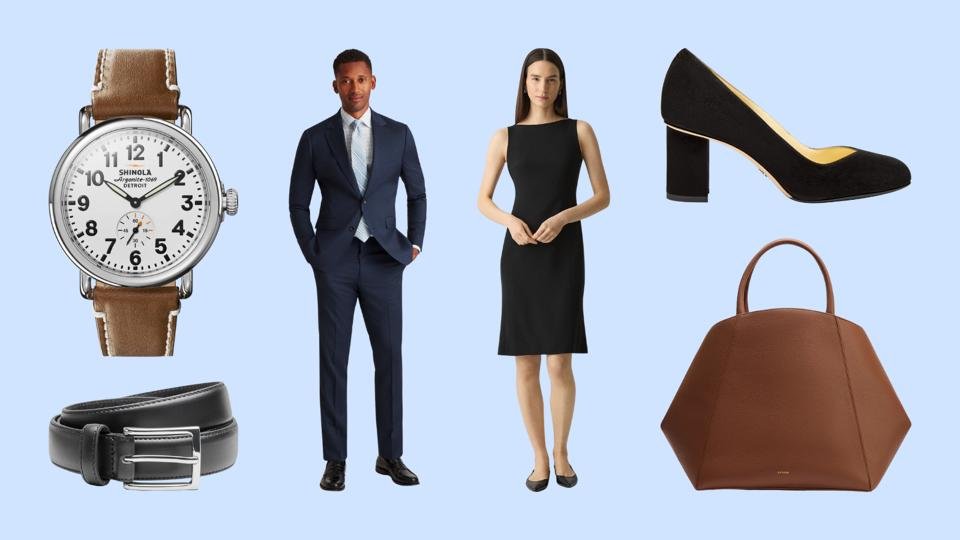
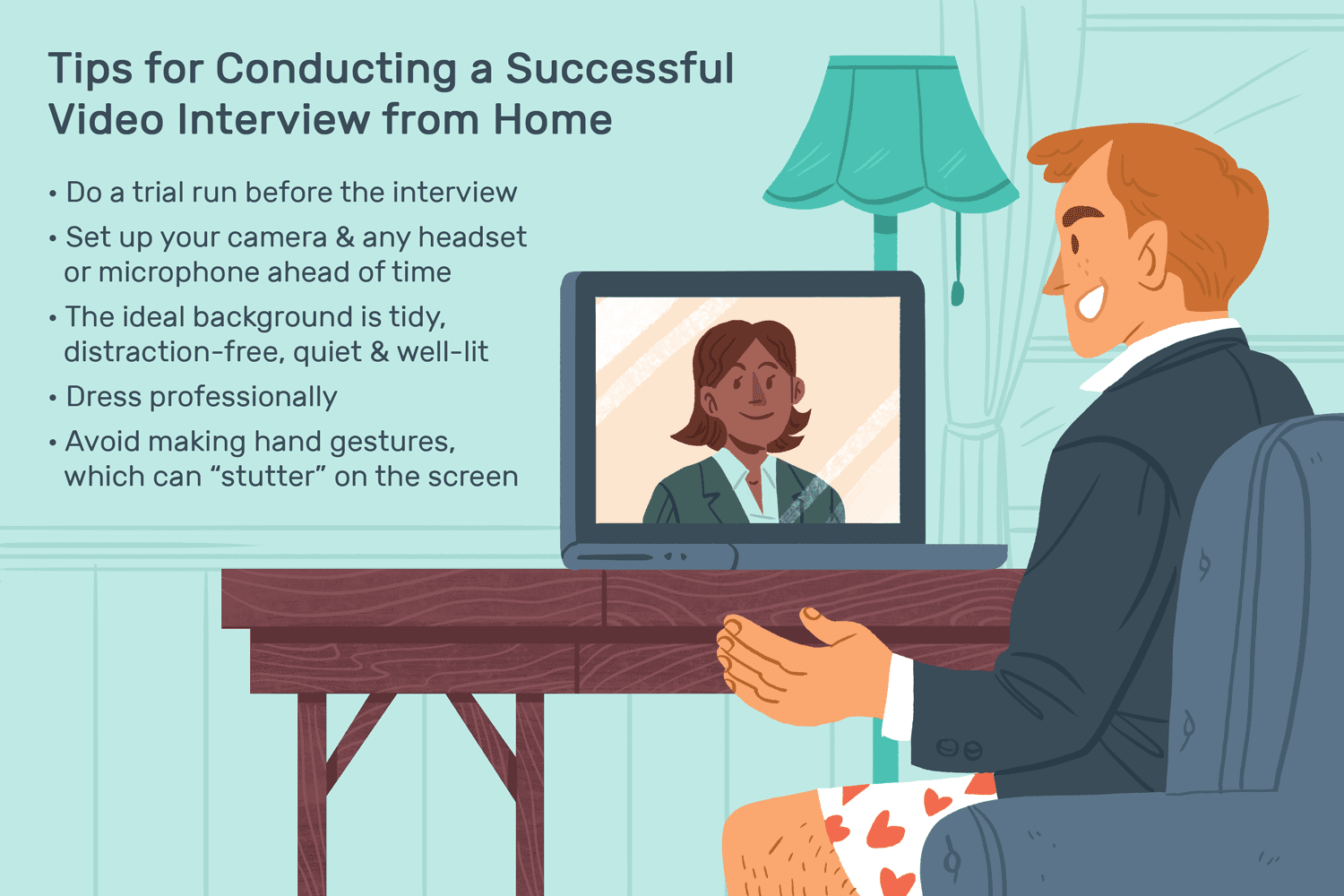
If you’ve done a Zoom interview that’s gone sideways before, you already know that virtual group interviews come with their own layer of chaos lag, talking over each other because nobody can read the room the way you can in person, and the very real possibility that you’ll be unmuted at the exact wrong moment. If yours is virtual, it’s worth reading up separately on how to dress and present yourself for a virtual interview the group format doesn’t lower the bar on that, it raises it, because now you’re being compared side-by-side on a grid.
The Group Task or Case Study Format
More common in consulting, sales, and some corporate management-track hiring: candidates are given a problem to solve together, and the interviewers mostly watch. This is the format that separates “confident” from “collaborative” fastest, because the task itself doesn’t matter nearly as much as how you behave while doing it.
The Group Info Session Interview
Sometimes what’s billed as a “group interview” is really a group information session with individual interviews folded in a presentation, followed by shorter 1:1 or small-group conversations. If your invite is vague about format (a lot of them are), it’s worth asking directly what to expect. That’s not a weird question to ask. It’s a smart one.
RULE FOR GROUP INTERVIEWS: Whatever the format, you are never actually being compared to the room. You’re being evaluated against the job description the same way you would be in a 1:1 interview. The other candidates just happen to be watching. That reframe alone takes a lot of the “beat everyone” pressure off, and it should, because that pressure is what causes most of the mistakes below.
Common Mistakes People Make in Group Interviews
I’ve coached a lot of people through this exact format, and the mistakes cluster into two very predictable camps.
The Windbags:
- Answering every question first, whether or not they were asked
- Repeating a point they already made, louder, because they think volume equals conviction
- Interrupting another candidate mid-answer to “add on”
- Treating every silence as an invitation to fill it
The Wallflowers:
- Waiting to be called on, every single time, even when there’s an opening
- Giving one-word or single-sentence answers when everyone else is giving two or three
- Agreeing with whatever the last person said instead of offering their own angle
- Physically shrinking bad posture, minimal eye contact, arms crossed (I promise the interviewer notices body language before they notice your resume bullet points)
Here’s the thing both camps get wrong: they’re both playing to the room instead of playing to the job. The Windbag thinks the goal is to win the most airtime. The Wallflower thinks the goal is to avoid embarrassment. Neither one is thinking about what the interviewer is actually there to learn, which is simply: would this person be good at the job, and good to work with?
I should also say if this list made you wince a little, that’s not a character flaw, it’s just nerves doing what nerves do. You know more than you think you do walking into these; the format is just unfamiliar enough to make you doubt it.
How to Stand Out in a Group Interview (Without Steamrolling Anyone)
This is the part people actually came here for, so let’s be tactical.
- Answer with a shape, not a wall. A specific, well-structured 30–45 second answer beats both the one-sentence non-answer and the three-minute monologue. If you tend to ramble, practice out loud with a timer before you go in it feels awkward, it works.
- Build, don’t repeat. If someone before you gave a good answer, don’t just agree with it add a genuinely different angle. “I’d add to that —” is one of the most useful phrases in a group interview, because it shows you were actually listening, not just waiting for your turn.
- Use names. If you catch another candidate’s name during introductions, use it once later (“Building on what Priya said —”). It’s a small thing that reads as high emotional intelligence, because it is.
- Ask one sharp question, not five polite ones. In group settings, a single specific question about the role or the team shows more than a list of generic ones ever will.
- If there’s a group task, take a role that plays to your strength but don’t grab the loudest one on instinct. Someone needs to keep time, someone needs to synthesize the group’s ideas at the end, someone needs to make sure the quietest person gets heard. That last one, especially, gets noticed by interviewers far more than people expect.
- Manage the elephants in the room directly instead of dancing around them. If there’s an obvious tension you’re clearly the most junior person in the group, or the task has gone off the rails naming it calmly is far more impressive than pretending it isn’t happening.
And if the dreaded “what’s your biggest weakness” question comes around the circle (it will it always does), resist the urge to one-up whoever answered before you with a more dramatic flaw. Answer it like it’s the only question in the room, because for you, it is.
How Kyla Approaches Group Interview Prep Differently
Most interview prep mine included, for the standard 1:1 format is built around your story: your examples, your delivery, your pacing. Group interview prep has to add a second layer on top of that: situational awareness under time pressure, in real time, next to strangers who are also nervous.
So when I coach someone for a group interview specifically, we don’t just rehearse answers. We run live-fire practice with interruptions, competing voices, and the exact kind of “wait, was that my turn?” moments that trip people up in the actual room because that’s the part you genuinely can’t practice by reading a blog post (even a good one, and I do think this one’s pretty good). We also work on the read-the-room skill in isolation: when to jump in, when to hold back, and how to do both without it looking calculated.
If your interview is coming up fast and there’s no time for a full engagement, that’s a real scenario too which is exactly why I built an on-the-spot resume, LinkedIn, and interview strategy session for people who need sharp, focused prep now, not next week.
What This Means for Your Job Search
Here’s the bigger-picture point, and it’s one worth sitting with: if you’re getting invited to group interviews, your resume already did its job it got you in the room. The group interview is a different test entirely, and it’s testing something a resume can’t show: how you actually operate around other people, under mild pressure, in real time.
If the idea of a group interview makes your stomach drop, you’re not alone, and it’s not a sign you’re bad at interviews generally it’s a sign this particular format is unfamiliar, which is a completely fixable problem. I’ve watched plenty of sharp, qualified people talk themselves out of opportunities before they even walk in the door, purely because the format felt unfair. It isn’t. It’s just different, and different just means it rewards a slightly different skill set one you can absolutely build.
Broader hiring trends back this up, too: SHRM’s talent acquisition research points to employers increasingly weighing collaboration and communication skills alongside technical qualifications which is precisely what a group interview is designed to surface. Indeed’s career guide also treats group interviews as increasingly common across retail, hospitality, and high-volume hiring specifically because they let employers assess several finalists’ interpersonal skills side-by-side in a fraction of the time. None of that should be intimidating. If anything, it’s useful it tells you exactly what to prepare for.
Frequently Asked Questions About Group Interviews
What is a group interview?
A group interview is when an employer interviews multiple candidates for a role or similar roles at the same time, either through shared Q&A, a group task, or both. It lets employers evaluate several finalists efficiently while also observing communication and collaboration skills directly.
Why do employers use group interviews?
Mainly for efficiency when hiring for multiple similar positions at once, and because the format reveals things a one-on-one interview can’t how a candidate listens, collaborates, and handles pressure around other people rather than just answering rehearsed questions.
How long does a group interview usually last?
It varies widely depending on group size and format, from under an hour for a simple panel Q&A to a half-day for a full group task or assessment-center-style process. If the invitation doesn’t specify, it’s completely reasonable to ask.
How many candidates are typically in a group interview?
This ranges by employer and role, commonly anywhere from three to eight or so candidates in one session, though larger formats do exist, particularly in high-volume or campus recruiting.
Should I answer first in a group interview?
Not automatically. Answering first shows initiative, but answering well matters far more than answering fastest. A strong, specific answer given third or fourth beats a rushed one given first.
What if another candidate gives the same answer I planned to give?
Build on it instead of repeating it or panicking. Acknowledge what they said, then add your own specific example or a different angle that shows you were listening and that you have something distinct to offer.
Is it bad to stay quiet in a group interview?
Staying quiet the entire time is a real risk, since interviewers can only evaluate what they actually see and hear. You don’t need to talk the most, but you do need to contribute clearly at least a few times.
How should I prepare differently for a group interview versus a one-on-one?
Beyond your usual answer prep, practice out loud with interruptions and competing voices if you can with a friend, a coach, or even a recorded mock version since the real challenge is timing and read-the-room judgment, not just content.
If group interviews are the thing standing between you and your next offer, that’s a solvable problem, not a personality flaw and it’s exactly what I work on with clients inside interview coaching. We’ll run the real scenario, not just talk about it in theory, so the next time you’re sitting across from three interviewers and two other candidates, you’ll already know what you’re going to do with the room.