A professional resume writer creates the document that gets you past applicant tracking software and in front of a human reader. A career coach builds the strategy around it: where to apply, how to network, how to interview, and how to negotiate. The resume gets you interviews; coaching helps you turn those interviews into offers. Used together, they shorten a job search that otherwise tends to drag on.
If you’ve been sending out applications and hearing nothing back, I’m sorry. It’s a special kind of exhausting, and it is rarely a reflection of your talent. More often, it’s a packaging problem or a strategy problem (or both, because the universe has a sense of humor). Let’s sort out which one you have.
QUICK TAKEAWAYS
- A professional resume writer turns your experience into a document built to pass ATS filtering and survive a recruiter’s quick scan.
- A career coach handles everything the resume can’t: targeting, networking, interviewing, and salary negotiation.
- Resume without strategy gets you interviews you may not know how to win. Strategy without a resume gets you conversations that never turn into interviews.
- A long job search has real costs: lost income, lost momentum, and lost confidence.
- Hire both when you’re not getting callbacks, changing careers, aiming higher, or simply don’t have the energy to figure it out alone.
What Is a Professional Resume Writer?
A professional resume writer is a person who writes and strategically positions career documents (resumes, cover letters, and often LinkedIn profiles) for job seekers. A good one doesn’t just reformat what you already have. They interview you, pull out the accomplishments you’ve stopped noticing, and translate them into language that hiring teams and software both understand.
That last part matters more than people think. You are too close to your own career. You’ve been doing your job so long that your best results feel like “just what I do.” A writer sees them fresh.
If you want a closer look at what this involves, here’s how resume and cover letter writing services work with me, from the first conversation through the final draft.
What a resume writer actually does
- Interviews you about your wins, not just your job titles
- Positions you for a specific target role, not “anything remotely related”
- Writes achievement-driven bullets instead of copying your job description
- Formats for software and humans so the document parses cleanly and reads quickly
- Weaves in the right keywords without turning the page into word salad
What Is a Career Coach?
A career coach is a professional who helps you define your goals, build a job search strategy, and develop the skills to carry it out, including networking, interviewing, and negotiating. Where a resume writer produces a document, a career coach builds a plan and holds you accountable to it.
Think of it this way: a resume is a very good key. A career coach helps you figure out which doors to try, and what to say when someone opens one.
My career coaching services are built around exactly that: strategy first, tactics second, and honest feedback throughout (the kind you can’t get from your cousin who says your resume “looks great!”).
Why the Resume Matters So Much: ATS and the Quick Scan
Two readers decide whether your resume survives, and they have very different personalities.
Reader #1: The ATS (the robot)
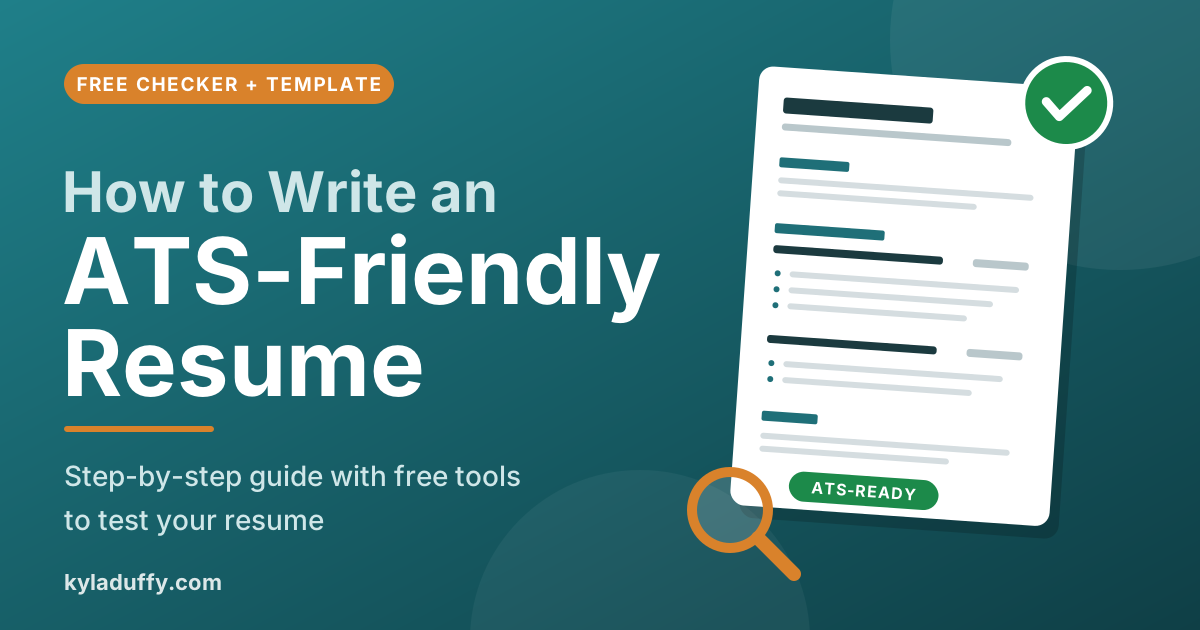
An ATS, or applicant tracking system, is software employers use to collect, sort, and filter job applications. It scans each resume for relevant keywords, titles, and qualifications, and many companies use it to rank or screen candidates before a human ever looks.
The practical takeaway: if your resume is formatted in a way the software can’t read, or it’s missing the language the job description uses, you can be perfectly qualified and still invisible. I break down what works in my guide to the ATS-compliant resume, and why resume keywords deserve more attention than most people give them.
Reader #2: The recruiter (the human with 200 other tabs open)
If your resume clears the software, a recruiter or hiring manager gives it a fast first look. You’ll often hear the figure of about six seconds. [VERIFY: confirm the source and exact figure for the “six-second scan” before publishing, or reword as “a matter of seconds.”] Whatever the precise number, the principle holds: in that first glance, your best material needs to be unmissable.
For more on what hiring professionals are looking for in the talent-acquisition process, SHRM’s talent acquisition resources are a solid place to start.
RULE #1: Write for the robot first, then the human.
Your resume has to pass before it can persuade. Skip the first step and the second never happens.
How a Resume Writer and Career Coach Work Together
Here’s the part that surprises people: these two services aren’t competitors. They’re two halves of the same engine.
| Stage of your search | What’s happening | Who helps most |
|---|---|---|
| Getting noticed | Your application needs to clear ATS filtering and a fast human scan | Resume writer |
| Getting found | Recruiters need to discover you on LinkedIn, and your story needs to match your resume | Resume writer (LinkedIn) |
| Getting strategic | You need to decide where to aim and how to find roles beyond the job boards | Career coach |
| Getting interviews | You need a way to reach real people, not just submit into the void | Career coach |
| Getting offers | You need to answer questions well and negotiate with confidence | Career coach |
A great resume sent into a poorly planned search is like a beautifully wrapped gift mailed to the wrong address. And a brilliant strategy with a vague, generic resume is like showing up to a party in your pajamas. Technically you arrived, but nobody’s taking you seriously.
The Real Cost of Doing It Alone (and Doing It Slowly)
Let’s talk about what a long job search costs, because it’s rarely just the price of a service you didn’t buy.
The money you don’t see
Every extra month without the right job can mean a month of income you don’t get back. Even if you’re employed and job hunting on the side, a search that drags on can mean staying longer in a role that no longer fits. To see how the job market is behaving right now, the U.S. Bureau of Labor Statistics’ monthly Employment Situation report is the official source for employment data.
The confidence you do feel
Silence is brutal. After enough unanswered applications, people start doubting themselves, and that doubt shows up in interviews. If this sounds familiar, you’re in good company. I’ve written about it in Is Getting a Job Taking You Far Longer Than Expected? because it’s one of the most common things I hear.
The “600 applicants” problem
Many postings attract large numbers of applicants, which means “apply and hope” is a weak plan. I dig into the numbers game (and how to get around it) in How Can You Get a Job Interview When 600 People Have Already Applied?
I’m not going to hand you a precise statistic on how much a coach shortens your search, because honest numbers on that vary by person, industry, and market. [VERIFY: if you’d like a hard stat here, add one only from SHRM, BLS, or HBR.] What I will say is that a clear target and a strong, tailored resume remove two of the biggest sources of wasted time.
Common Mistakes People Make When They DIY the Job Search
I’m a big believer in doing things yourself when it makes sense. (I wrote an entire eBook, Strategize Your Job Search, so you can!) But a few patterns show up again and again.
Mistake 1: Using one resume for everything
A general resume tends to get you generally nothing. I explain why in Why a General Resume Gets You Generally Nothing. Tailoring doesn’t mean starting over each time; it means knowing what to adjust and what to leave alone.
Mistake 2: Describing duties instead of results
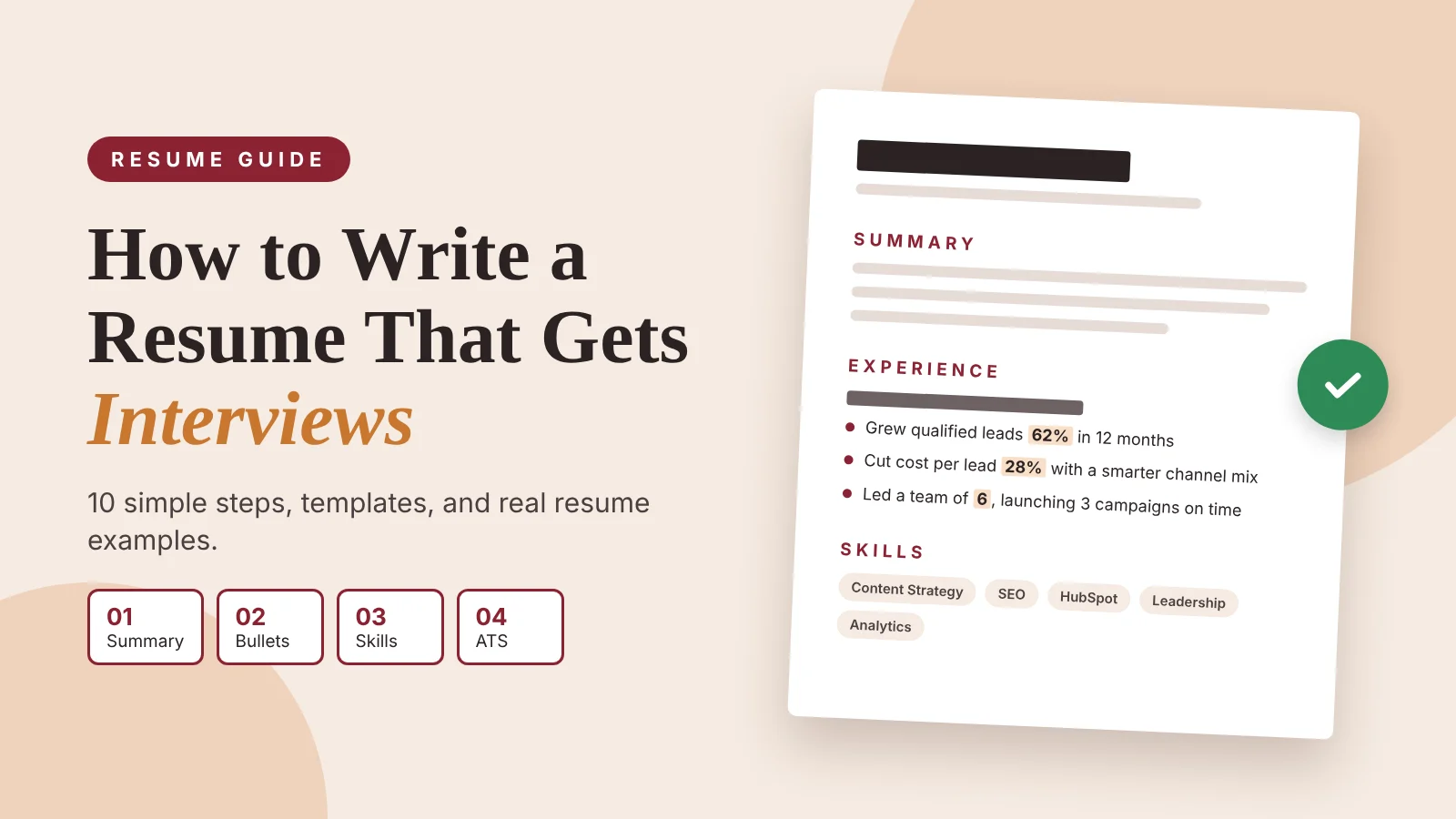
“Responsible for managing accounts” tells me what your job was. It doesn’t tell me whether you were good at it. Strong bullets show impact, and I walk through how to build them in How to Write Powerful Resume Bullets.
Mistake 3: Not knowing why the resume isn’t working
Maybe it’s the format. Maybe it’s the keywords. Maybe it’s the target. Diagnosing it is half the battle, which is why I wrote Why Your Resume Is Not Landing You Job Interviews.
Mistake 4: Living only on the job boards
Job boards are one door among many. A lot of opportunities move through conversations before they ever become a public posting. If that sounds mysterious, this trick for accessing the hidden job market is a good place to begin.
Mistake 5: Walking into interviews unprepared
Getting the interview is only half the game. Plenty of people stall here because they assume they “don’t know how.” I promise you do, and I explain why in Job Interviews: “I Don’t Know How To.” Yes, You Do. Still, structured practice makes a measurable difference, which is where job interview coaching comes in.
Mistake 6: A LinkedIn profile that contradicts the resume
Recruiters often check LinkedIn right after they read your resume. If the two tell different stories, trust drops fast. A strong profile reinforces your resume instead of competing with it, and my LinkedIn profile optimization services are designed to keep your story consistent.
How I Approach This Differently
I’m Kyla Duffy, and I do both the writing and the coaching. That matters, because the best resumes come out of strategy conversations, and the best strategy conversations get sharper when there’s a strong document on the table.
Here’s what that looks like in practice:
- We start with the target, not the template. Before I write a word, we figure out where you’re headed.
- I pull out the wins you’ve stopped noticing. Most clients undersell themselves by a mile.
- I write for ATS and people. Clean structure for the software, clear value for the reader.
- I tell you the truth. Gently, but clearly. You’re paying for an honest outside view.
- I don’t hand you a document and wave goodbye. The resume is one tool in a bigger plan.
If you’d like to see what working with me costs before you commit to anything, my rates page lays it out plainly.
A note on transparency
Because I’ve mentioned the sources above: I’m not affiliated with SHRM, the Bureau of Labor Statistics, Harvard Business Review, or Indeed. I link to them because they’re respected, well-established resources. The only business interest I have here is my own, and I’d rather you know that up front. For broader career-planning perspective, Harvard Business Review’s career planning section and Indeed’s career advice library are both worth bookmarking.
A word of caution
Not every resume service is created equal, and unfortunately some are outright scams. Before you hire anyone (me included), read Beware of Resume Writing Scams. It will save you money and a headache.
When Do You Actually Need Both?
You don’t need every service at every stage of your career. Here’s an honest guide.
You likely need a professional resume writer if:
- You’re applying regularly and not getting callbacks
- You’ve been in the same role for years and haven’t updated your resume in ages
- You’re moving up a level (say, from manager to director)
- You have gaps, short stints, or a non-linear path that need smart framing
- You know your work is strong but can’t put it into words
You likely need a career coach if:
- You’re not sure what to target next
- You’re changing careers or industries
- You’re getting interviews but not offers
- You dread networking and want a plan that feels human
- You’ve been searching for months and feel stuck
You likely need both if:
- You’ve been laid off and need to move fast with a clear plan
- You want a significant jump in role, pay, or industry
- You’re tired of guessing and want one person who sees the whole picture
RULE #2: If you’re stuck, the problem is rarely “effort.”
It’s usually clarity (what you want), packaging (how you present it), or strategy (how you reach people). A resume writer and a career coach cover all three.
What This Means for Your Job Search
The goal isn’t a prettier resume. The goal is a shorter path to a job you actually want.
A professional resume writer makes sure you’re noticed. A career coach makes sure you’re prepared, targeted, and confident once you are. Together, they take the guesswork (and a fair amount of the heartache) out of a process that was never designed to be pleasant.
You don’t have to figure this out alone. (And honestly, you probably shouldn’t. Nobody proofreads their own wedding toast and expects it to be perfect.)
Frequently Asked Questions
Why should I hire a professional resume writer?
A professional resume writer helps your resume clear ATS screening and make a strong impression in a recruiter’s quick first look. They also surface accomplishments you may have overlooked and position you for a specific target role. If your resume isn’t generating interviews, a writer can quickly identify and fix what’s holding it back.
What does a career coach do for job seekers?
A career coach helps you clarify your goals, build a job search strategy, and strengthen the skills you need to carry it out. That typically includes networking, interviewing, and salary negotiation. They also provide accountability and an objective outside perspective.
What’s the difference between a resume writer and a career coach?
A resume writer creates your career documents, such as your resume, cover letter, and often your LinkedIn profile. A career coach helps with the bigger strategy and the human side of the search: targeting, networking, interviews, and offers. The two overlap in the middle, which is why many job seekers use both.
Is hiring a professional resume writer worth it?
It often is, particularly if you’re not getting interviews, changing fields, or aiming for a higher-level role. A strong resume can shorten your search, and a shorter search can mean less lost income. Results vary by person and market, so treat any guarantee of specific outcomes with suspicion.
How do I know if I need a resume writer or a career coach?
If you’re sending applications but hearing nothing, start with the resume. If you’re getting interviews but not offers, or you don’t know what to target, start with coaching. If you’re experiencing both problems, combining the two is usually the most efficient route.
What is an ATS, and why does it matter for my resume?
An ATS (applicant tracking system) is software employers use to collect, organize, and filter job applications. If your resume has formatting the software can’t read, or lacks the keywords from the job description, it may never reach a human. A professional writer builds your resume to work for both the software and the person reading it.
Can a career coach help if I’ve been laid off?
Yes. After a layoff, a coach can help you regain your footing, define a clear target, and build a plan so you aren’t just applying blindly. Coaching also helps with the emotional side of the search, which is real and deserves attention.
How do I avoid resume writing scams?
Be cautious of anyone who guarantees a job, promises results that sound too good to be true, or won’t explain their process. Look for a real person, a clear process, and transparent pricing. My post on resume writing scams, linked earlier in this article, covers the warning signs in detail.
Ready to Stop Guessing?
If you’ve read this far, you probably already know whether you’re stuck on the resume, the strategy, or both. (If you’re not sure, that’s a perfectly good place to start too.)
Here’s what I’d suggest: book a consultation, and we’ll talk through where your search is today and what’s getting in your way. If it turns out you need a sharper resume, we’ll get it done. If you need a plan, a target, or interview practice, we’ll build that too. And if you’d just like a second set of eyes on the whole picture, that’s what I’m here for.
Take another look at the career coaching and resume writing services I described above, then reach out. Let’s get you out of the application void and into the interviews you deserve.
You’ve already done the hard part, which is showing up. Let me help with the rest.
— Kyla