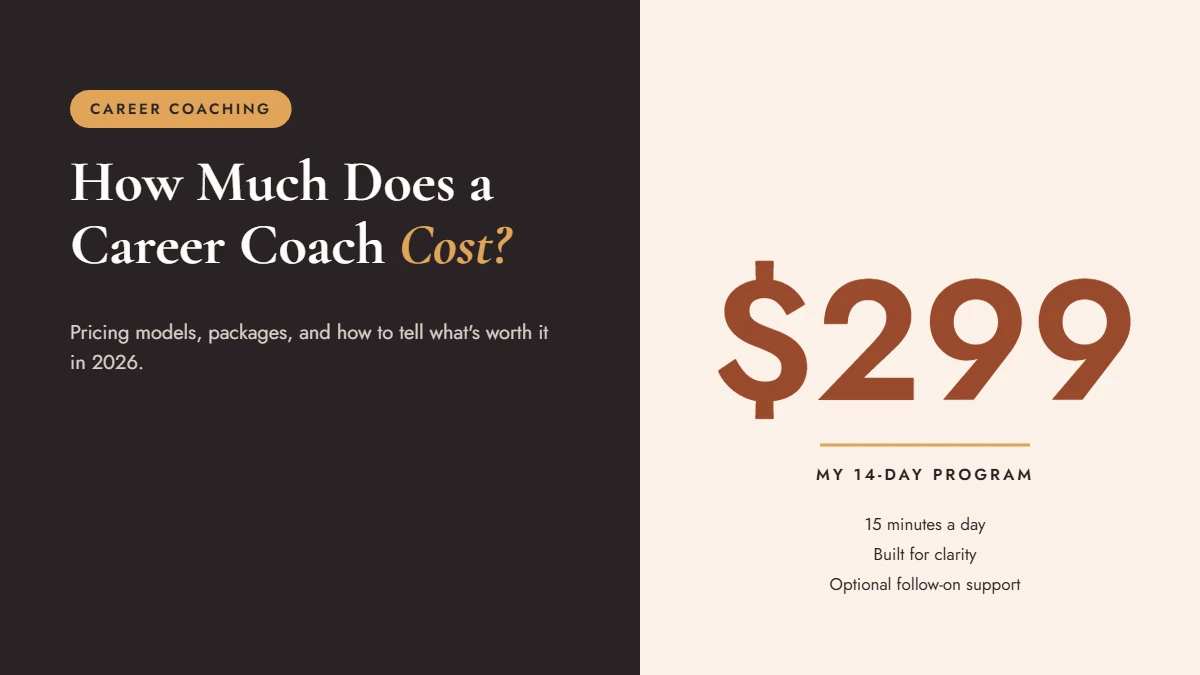
Here’s one concrete number to anchor this conversation: my own career coaching starts with a 14-day “Find Your Path” challenge for $299, designed to take about 15 minutes a day. I share that up front because career coaching prices are often hidden behind discovery calls, and that makes comparing options harder than it needs to be.
So, how much does a career coach cost? Prices vary widely across the industry, from free help at college and workforce centers to premium executive programs, and they depend mostly on the format, the coach’s specialty, your seniority, and what’s included. The questions below will help you figure out what you should expect to pay and what’s actually worth paying for.
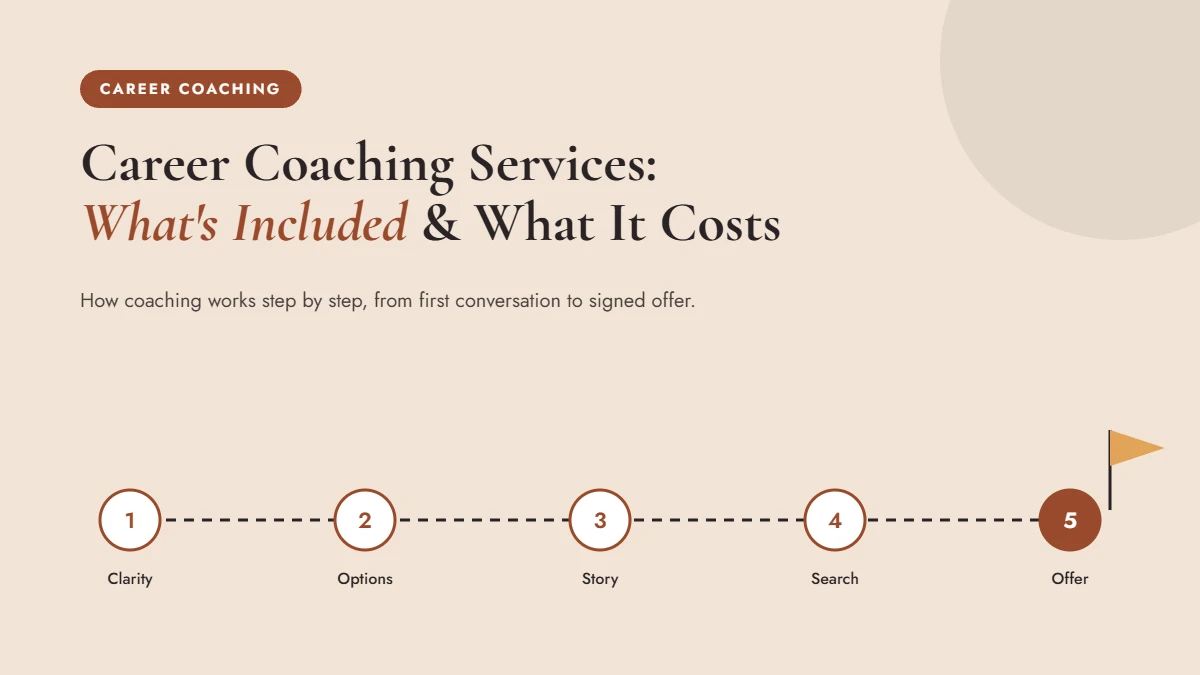
A definition first: a career coach is a professional who helps you get clear on your direction, plan your next move, and follow through, often including job search strategy, materials, and interview preparation. If you want the long version, here’s what a career coach actually does.
How Do Career Coaches Price Their Services?
Most coaches use one of four models:
| Pricing model | How it works | Best for |
|---|---|---|
| Per session | Pay for each meeting | A specific, short-term need |
| Package | A set number of sessions at a bundled price | Career changes and full searches |
| Program | A structured process over weeks, often with materials | People who want a clear path and accountability |
| Retainer | Ongoing access over months | Executives and long-term development |
What Makes One Career Coach Cost More Than Another?
- Specialty and experience. Coaches with deep expertise in a field or level usually charge more.
- Your seniority. Executive coaching tends to cost more because the stakes and complexity are higher.
- What’s included. Resume, LinkedIn, and interview work add value (and cost).
- Access. Support between sessions, async feedback, or on-call availability increases price.
If you only remember one thing: compare outcomes, not hourly rates.
- A cheaper coach with no process can cost you months.
- Ask every coach: “What will I have at the end that I don’t have now?”
What Do You Actually Get for the Money?
A good coaching engagement should leave you with tangible outcomes, not just good conversations. Here’s an illustrative before-and-after of what changes for many clients over a short program (a composite):
Before: “I want to leave my job, but I don’t know what I’d do instead. I’ve been browsing postings for months.”
After: “I’m targeting two adjacent roles, I’ve talked to four people doing them, my resume is being rewritten for that direction, and I know my next three steps.”
Want to know what coaching would realistically cost for your situation? Book a free consultation, and I’ll tell you honestly what you need and what you can skip.
What Does Career Coaching Cost With Me?
My pricing is published so you can plan:
- Career coaching: $299 for the 14-day “Find Your Path” challenge.
- Interview coaching: $125 per session, or $299 for the full “Nail Job Interviews” course.
- Resume writing: $199 to $599 by career level.
- On-the-Spot strategy session: $1,199 for two focused hours on resume, LinkedIn, cover letter, and strategy.
Everything is on my rates page and services page. If you’re comparing interview support specifically, here’s my guide to interview coaching costs.
Are There Free Career Coaching Options?
Yes. College career centers often serve students and alumni, and public workforce centers provide free guidance. These are excellent starting points, especially early in your career. The tradeoff is usually time and depth. I compare these options in more detail in career counseling vs. career coaching.
Is a Career Coach Worth the Cost?
It usually is when your situation has real stakes: a career change, a stalled search, a return to work, or a step up in level. A search that runs months longer than it needs to has a cost too. If you’re considering a pivot, my signs you need a career change coach may help you decide, and my guide to career coaching services explains what’s included.
For research on your options, the Occupational Outlook Handbook is a great source on roles and training, Harvard Business Review’s career planning articles are excellent reading, and the National Career Development Association covers the career development profession.
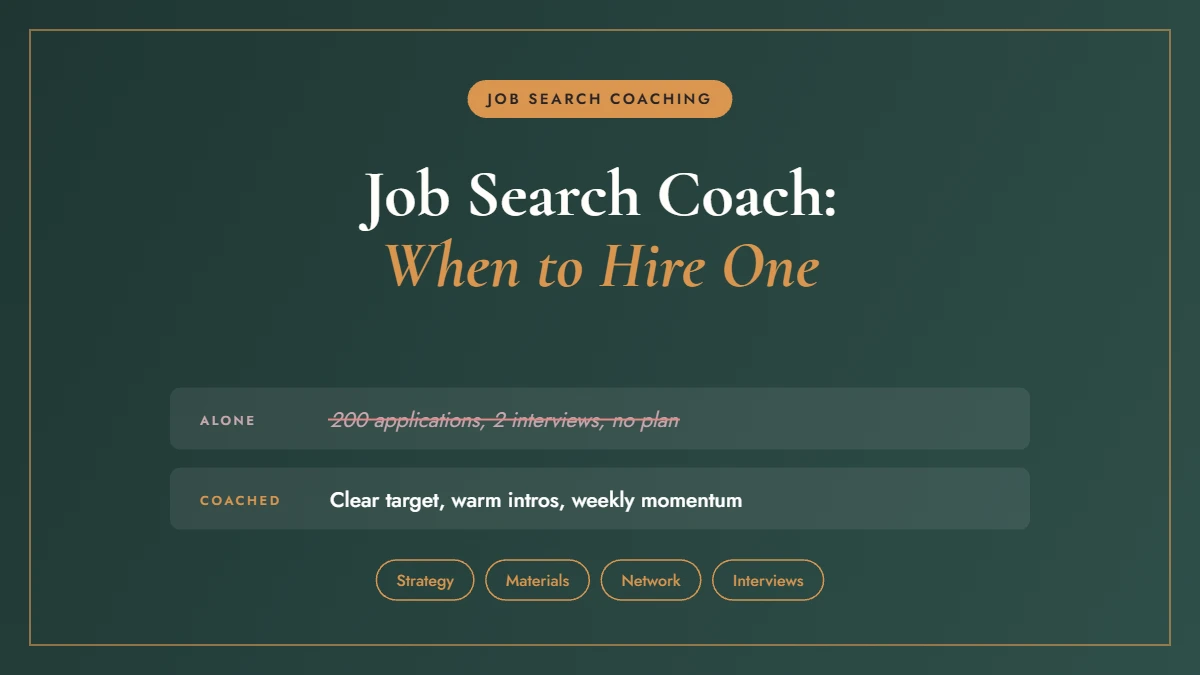
If your main goal is landing a job rather than choosing a direction, a narrower engagement may be all you need; here’s what a job search coach does and when to hire one.
How Do I Choose a Coach Within My Budget?
- Start with the smallest option that solves your real problem.
- Ask for a clear outcome and timeline.
- Read reviews from people in situations like yours.
- Make sure you like how they think; trust matters more than credentials alone.
More questions to ask are in my guide to choosing the right career coach. Learn more about my career coaching program anytime.
Quick Answers to Common Questions
How much does a career coach cost?
Career coaching prices vary widely, from free services at colleges and workforce centers to premium executive programs. My career coaching starts with a 14-day ‘Find Your Path’ challenge for $299.
Why do career coach prices vary so much?
Price depends on the coach’s experience and specialty, the format (single sessions, packages, or programs), the client’s seniority, and what’s included, such as resume or LinkedIn work.
Are career coaching packages better than single sessions?
Packages work well for bigger goals like a career change or a full job search. Single sessions are great for a specific need, such as preparing for one interview.
Is career coaching tax deductible?
Tax rules depend on your situation and change over time. I’m not a tax advisor, so check with a qualified tax professional.
Is a career coach worth the cost?
It’s often worth it if you’re stuck, changing direction, or in a long search, because shortening a search or landing a better role can easily outweigh the cost.
Let’s Talk About What You Actually Need
You shouldn’t have to guess what coaching will cost or whether it’ll help. Book a free consultation, tell me where you’re stuck, and I’ll recommend the lightest option that will actually move you forward.