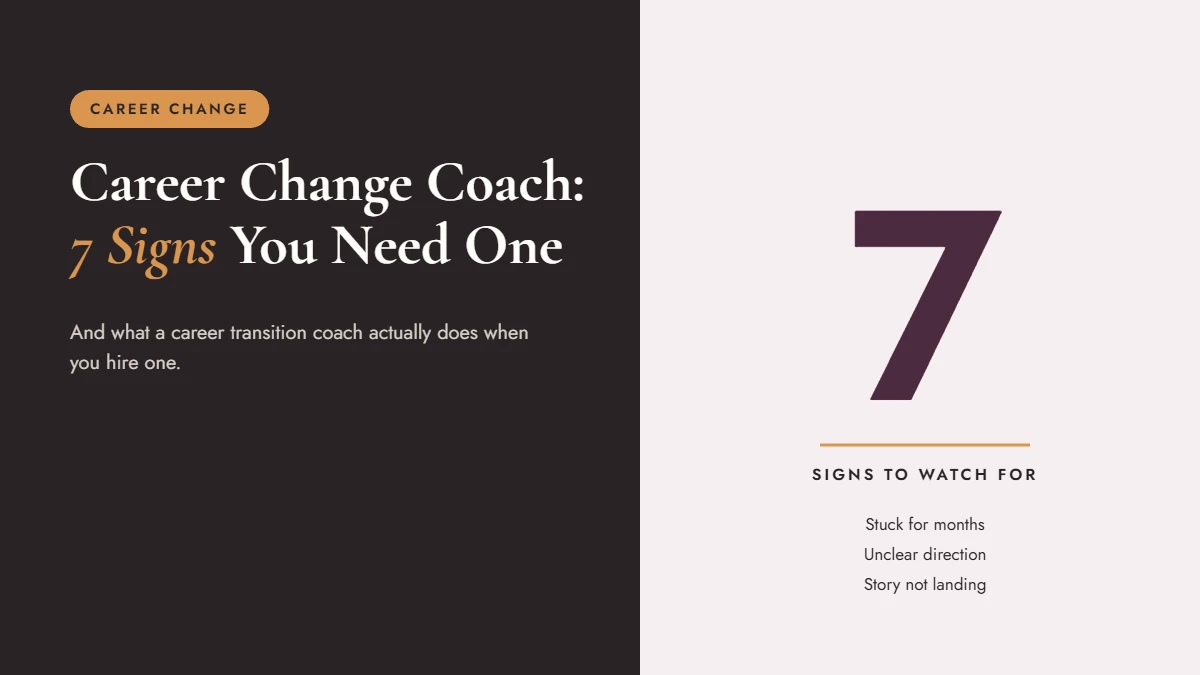
A career change coach helps you figure out what’s next, test it before you leap, and present your experience so a new field takes you seriously. You likely need one if you’ve been stuck for months, can’t choose between directions, or are applying in a new field and hearing nothing back. If you already have a clear target and momentum, you may not need one at all, and that’s fine too.
A quick definition so we’re aligned: a career transition coach (another name for the same role) specializes in moves between roles, functions, or industries, as opposed to promotions within the same path. The work is part clarity, part translation, and part momentum.
What Does a Career Change Coach Actually Do?
Quick answer: A career change coach helps you narrow your options, run small experiments to test them, rewrite your story for the new field, and build a plan (networking, materials, interviews) to land a role there, with accountability along the way.
If you want the fuller picture of coaching in general, here’s what a career coach actually does. A career change coach applies that same toolkit to one specific challenge: helping employers see you in a new context.
7 Signs You Need a Career Change Coach
1. You’ve been “thinking about a change” for more than six months
Thinking is fine. Thinking on a loop, without a single concrete step, is a sign you need structure. (Sunday-night job-board scrolling counts as thinking, not acting. I say that with love.)
2. You have too many options, or none
Both problems look different but feel the same: paralysis. A coach helps you narrow down to two or three real candidates and test them.
3. You’re applying in a new field and hearing nothing
That usually means your story is still written in your old field’s language. Here’s more on positioning yourself for a new field.
4. You keep talking yourself out of opportunities
If you skip roles because you don’t check every box, you’re not alone; I see it constantly. I wrote about how clients talk themselves out of good opportunities.
5. Your search is taking far longer than you expected
Career changes do take longer, but not forever. If you’re months in with little traction, read why a job search can take longer than expected and what to change.
6. You’re making a big change at a big moment
Turning 40 or 50, coming back after time away, or leaving a long-time employer all raise the stakes. I’ve written specific plans for a career change at 40 and a career change at 50.
7. You want accountability, not just advice
Most people already know some of what they “should” do. A coach makes it far more likely you’ll actually do it, on a timeline.
RULE: Don’t quit your job to find out what you want. Test first. Small experiments (a course, a project, five conversations) cost little and teach you a lot.
Seeing yourself in three or more of these signs? Book a free consultation and let’s talk about where you’re stuck.
Coach, Counselor, or Do It Yourself?
Here’s how to decide:
| Option | Choose it if… |
|---|---|
| Career change coach | You have a rough direction (or two) and need clarity, a plan, and momentum. |
| Career counselor | You need formal assessments, or personal factors are tangled up in the decision. |
| DIY | You know your target, have a strong network there, and just need to execute. |
I explain the difference in detail in career counseling vs. career coaching. If you want to learn more about the career development profession, the National Career Development Association is a good resource. The Occupational Outlook Handbook is great for researching target roles, and Harvard Business Review’s career planning articles offer smart thinking on reinvention.
How to Choose a Career Change Coach
- Ask about their process. You want a clear path, not open-ended conversations.
- Ask what you’ll leave with. A target, a plan, and materials, ideally.
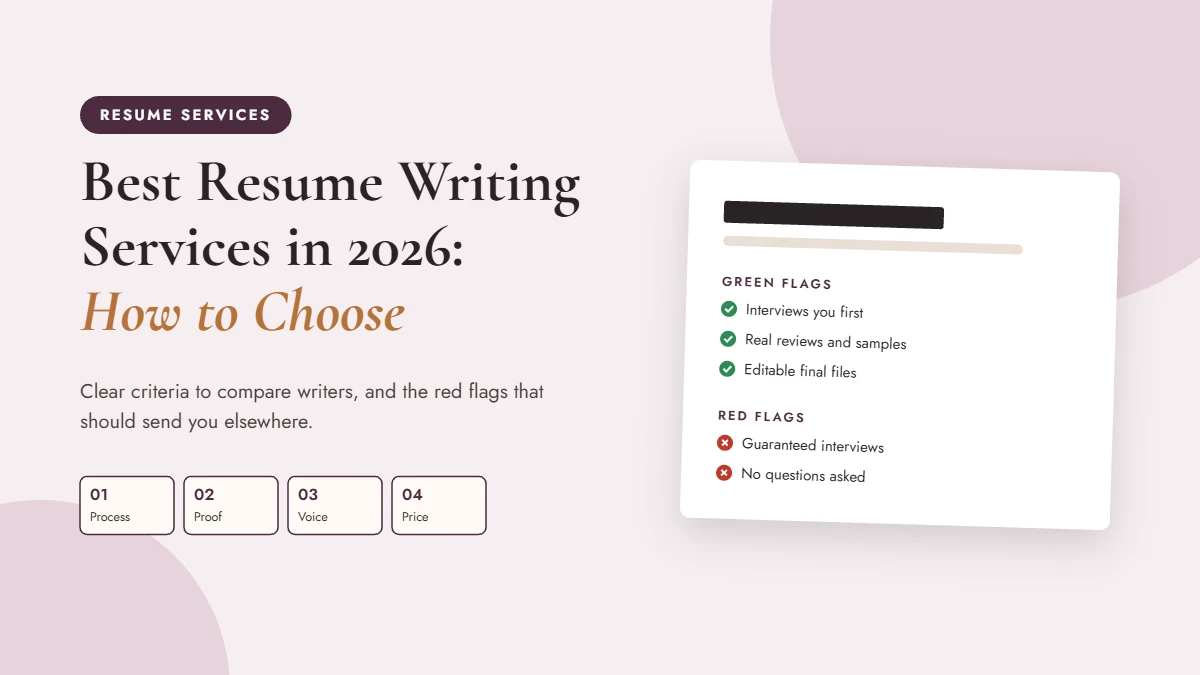
- Read real reviews. Look for clients who made changes like yours.
- Notice how you feel. Coaching works best when you trust the person; being coached is a skill in itself.
My guide on how to choose the right career coach has more questions to ask.
How I Work With Career Changers
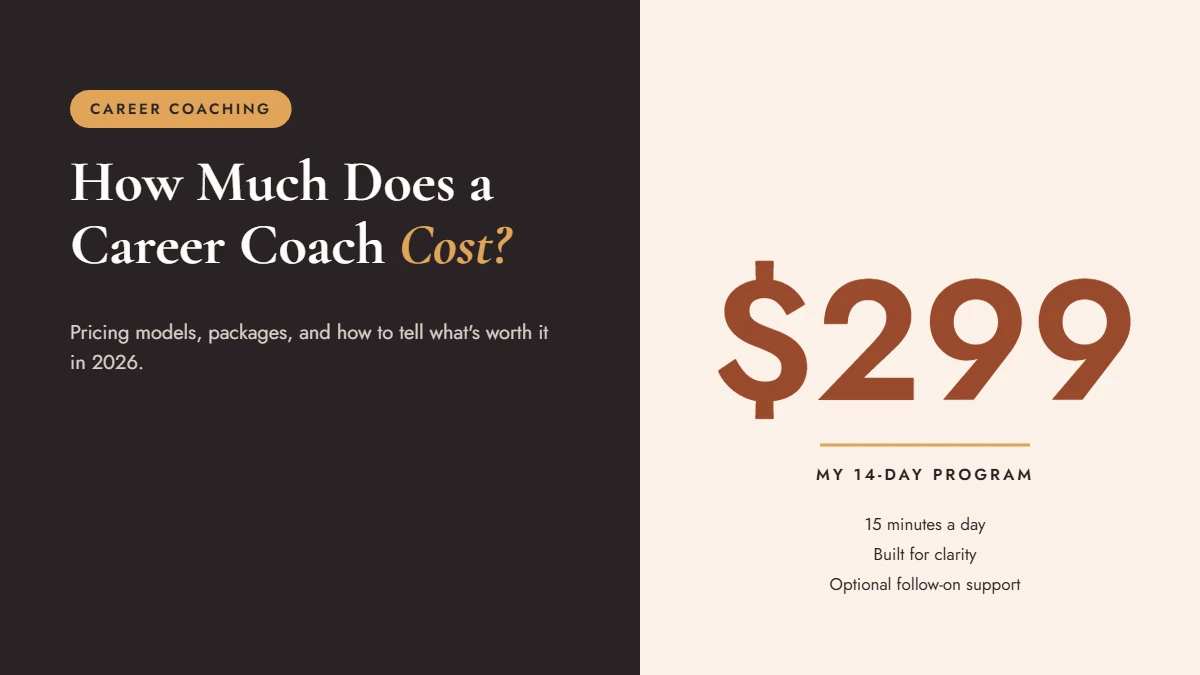
My career coaching starts with a 14-day “Find Your Path” challenge ($299) that takes about 15 minutes a day. From there, we can rewrite your resume and LinkedIn for the new direction and prepare you for interviews. All options are on my rates page and services page.
Frequently Asked Questions
What does a career change coach do?
A career change coach helps you get clear on a new direction, test options, translate your experience for a new field, and build a plan to get there, including materials, networking, and interview preparation.
What is the difference between a career coach and a career change coach?
A career change coach is a career coach who specializes in transitions: moving into a new role, function, or industry. The focus is on clarity, translation of your experience, and getting traction in a field where you don’t have a track record yet.
When should I hire a career change coach?
Consider it when you’ve been thinking about a change for months without acting, when you don’t know which direction to choose, or when you’re applying in a new field and getting no traction.
How much does a career transition coach cost?
Pricing varies widely across the industry. My career coaching starts with a 14-day ‘Find Your Path’ challenge for $299.
Can a career coach guarantee I’ll find a new job?
No. Hiring depends on factors no coach controls. A good coach improves your clarity, materials, and strategy, which improves your odds.
How long does a career change take with a coach?
It depends on how big the leap is. Adjacent moves can happen in a few months; bigger changes that need new skills can take longer. A coach helps you choose a realistic path and timeline.
Is career change coaching done online?
Usually, yes. Most of my coaching is virtual, which means you can work with me from anywhere.
Ready to Stop Thinking and Start Moving?
If you recognized yourself in these signs, you don’t have to keep circling. Book a free consultation, tell me where you’re stuck, and we’ll find a realistic first step toward the career you actually want.