A career coach for burnout helps you answer a hard question clearly: is the problem this job, this role, or this whole career? If rest and reasonable changes haven’t helped, you dread the core of the work (not just the bad weeks), and you can’t picture a version of the job you’d enjoy, it may be time to plan a move, ideally with support and without a rash, exhausted decision.
An important note before anything else: I’m a career coach, not a medical or mental health professional. If burnout is affecting your health, sleep, or daily life, please talk to a doctor or a licensed mental health professional. Career coaching can sit alongside that care; it doesn’t replace it.
What Can a Career Coach Do for Burnout?
Quick answer: A career coach helps you separate what’s draining you from what’s fixable, decide whether to stay, shift roles, or leave, and build a calm, realistic plan for whichever path makes sense.
When you’re exhausted, every option looks either impossible or desperate. Having someone outside the situation ask structured questions can make the picture clearer surprisingly fast. If you want to know what coaching involves more generally, here’s what a career coach actually does.
Five Burnout Myths That Keep People Stuck
Myth 1: “A vacation will fix it.”
Reality: Rest helps. But if you come back and the dread returns within days, the issue is likely structural: workload, role fit, culture, or the work itself.
Myth 2: “If I’m burned out, I’m in the wrong career.”
Reality: Not necessarily. Sometimes it’s the employer, the manager, or the scope, not the profession. A coach helps you figure out which.
Myth 3: “I should quit immediately.”
Reality: Sometimes leaving quickly is right, especially for health reasons. Often, planning the move while employed reduces pressure. Decisions made from exhaustion tend to swap one bad fit for another.
Myth 4: “Everyone feels this way; I just need to push through.”
Reality: Pushing through indefinitely is how people end up much worse off. Noticing that something needs to change is a strength, not a weakness.
Myth 5: “I don’t have the energy to job search.”
Reality: That’s real. It’s also why a small, structured plan beats an overwhelming one. My coaching program is designed around about 15 minutes a day for exactly this reason.
RULE: Don’t make a permanent career decision from your most exhausted day. Get clear first, then decide.
If you’re running on empty and need a clear, gentle next step, book a free consultation.
Is It the Job, the Role, or the Career?
- The job (employer or manager): you like the work but not the environment. A move to a different organization may be enough.
- The role: you like your field but not your day-to-day. Consider a different role in the same industry.
- The career: the core work itself drains you, even on good days. A bigger change may be worth exploring; see my signs you need a career change coach.
Sometimes the answer is an internal move. I’ve written about internal promotions and changing roles without changing companies. And if “follow your passion” is the advice ringing in your ears, read why that advice can backfire.
How to Move On Without Burning Out Further
- Protect your energy first. Small boundaries now make the next steps possible.
- Name what you need more and less of. Autonomy, pace, purpose, people.
- Explore lightly. A few conversations with people in roles you’re curious about.
- Update your materials in small pieces. One section a week is fine.
- Get support. A coach, a mentor, and, where needed, a health professional.
If you’re mid-career, my plans for a career change at 40 and at 50 may help. If you think change is coming whether you choose it or not, read navigating changes big and small.
For further reading, Harvard Business Review’s career planning articles are thoughtful, and the Occupational Outlook Handbook is useful for exploring other roles. If you’re unsure whether you need a coach or a counselor, the BLS describes mental health counselors separately, and my post on career counseling vs. career coaching explains the difference.
How I Can Help
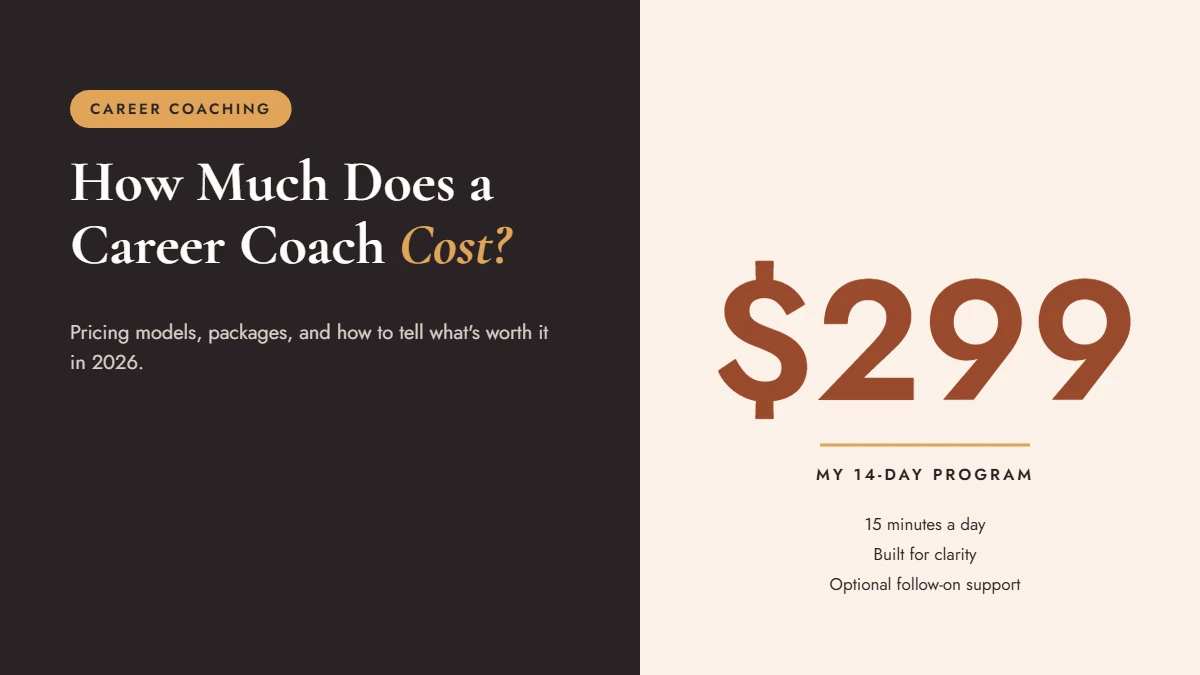
My career coaching starts with a 14-day “Find Your Path” challenge ($299) that takes about 15 minutes a day, which is about what most burned-out people can realistically spare. See all options on my rates page.
Frequently Asked Questions
Can a career coach help with burnout?
A career coach can help you figure out whether your work situation is the main source of burnout and what to change: your role, your employer, or your career direction. A coach isn’t a substitute for medical or mental health care.
How do I know if I should quit because of burnout?
Look at whether the exhaustion is tied to specific conditions you can change, such as workload or a manager, or to the work itself. If rest and adjustments haven’t helped and you dread the core of the job, it may be time to plan a move.
Should I see a therapist or a career coach for burnout?
If you’re experiencing symptoms that affect your health or daily life, start with a doctor or licensed mental health professional. A career coach can help with the career decisions alongside that support.
Is it a bad idea to quit without another job lined up?
It depends on your finances and health. For many people, planning a move while still employed reduces pressure. A coach can help you build a realistic plan either way.
What kind of jobs are good after burnout?
It depends on what caused it. Some people need a different employer or manager; others need a role with clearer boundaries, more autonomy, or a different pace.
How long does it take to change careers after burnout?
It varies. Moving to a different employer can take a few months; changing fields takes longer. Small, steady steps are often more sustainable than a sudden leap.
You Don’t Have to Figure This Out While Exhausted and Alone
Burnout makes everything feel urgent and impossible at the same time. Let’s slow it down and get clear. Book a free consultation, tell me what’s going on at work, and we’ll figure out the gentlest effective next step.