Here’s a fact from my own practice: supporting women in their careers matters enough to me that I give back with free resumes for women. Over the years, I’ve noticed a pattern among the women I work with at mid-career: they’re doing director-level work with manager-level titles, and their resumes describe about half of what they actually do.
A career coach for women helps close that gap. Breaking through a mid-career plateau usually means three things: making your results impossible to miss, asking clearly for what you want, and being willing to move if your current organization can’t offer the next step.
What Does a Mid-Career Plateau Look Like?
You’ve been in the same role (or the same level) for three years or more. You’re trusted, busy, and often the one who keeps things running. But promotions go to others, and you’re not sure why. Sound familiar? It’s one of the most common reasons women come to me.
Why Do So Many Capable Women Undersell Themselves?
Many of my clients describe team results as “we” and their own contributions as “helped.” That modesty is admirable in a team meeting and costly on a resume or in a promotion conversation. Here’s an illustrative before-and-after (a composite):
Before: “Helped the team transition to a new CRM and supported training for staff.”
After: “Led a 120-person CRM migration, designed the training program, and got the team fully adopted ahead of schedule.”
Same work. One version gets you promoted. More on this in how to write powerful resume bullets and in my post on how clients talk themselves out of good opportunities.
If you’re doing the work of the next level without the title, let’s talk about how to change that. Book a free consultation.
How Do I Position Myself for a Promotion?
- Name the role you want, out loud, to the person who decides.
- Document your wins monthly so you’re never scrambling.
- Find a sponsor, not just a mentor: someone who advocates for you in rooms you’re not in.
- Take visible projects that show next-level skills.
I’ve written more about earning internal promotions.
How Do I Negotiate With Confidence?
Prepare your evidence, know your market range, and practice the conversation out loud. Here’s how to negotiate salary without making it weird. For research on pay and hiring practices, the Occupational Outlook Handbook includes pay information by occupation.
What If It’s Time to Leave?
Sometimes the plateau is the organization, not you. If growth isn’t possible, a move may be the fastest path forward. If you’re also changing direction, see my plans for a career change at 40 and a career change at 50 (which includes notes for women over 50). Make sure your LinkedIn reflects your next level; start with my LinkedIn checklist.
Harvard Business Review’s career planning articles are excellent reading on advancement, and SHRM’s recruiting resources show how employers evaluate candidates.
How I Coach Women Through Plateaus
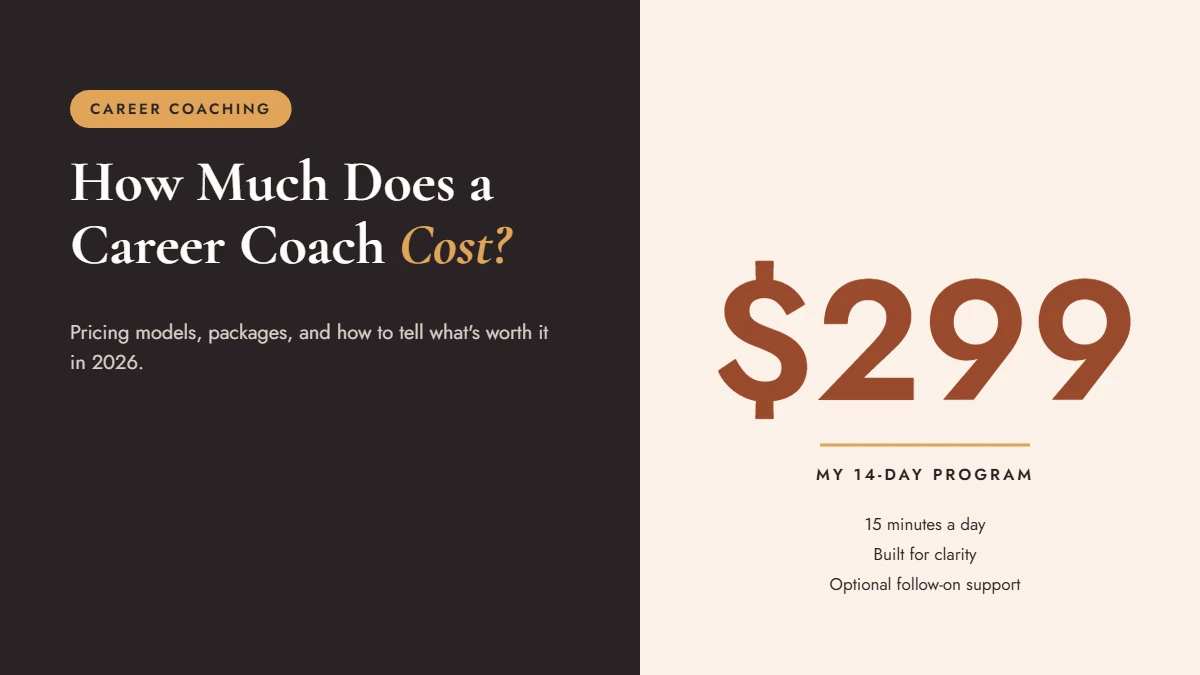
My career coaching starts with a 14-day “Find Your Path” challenge ($299) that takes about 15 minutes a day. From there, we can update your resume and LinkedIn and prepare for promotion or interview conversations. See everything on my rates page, and read whether career coaching is worth it for your situation.
“I truly could not have done this without Kyla. Thank you so much for your support.”
— Google review
Quick Answers to Common Questions
What does a career coach for women do?
A career coach for women helps you clarify goals, communicate your value confidently, prepare for promotions and negotiations, and plan transitions, often with attention to challenges women commonly report, like underselling achievements or navigating caregiving gaps.
How do I break through a mid-career plateau?
Get clear on the role you want next, make your results visible, build relationships with decision-makers, and ask directly for the opportunity. If your current organization can’t offer growth, plan a move.
Is career coaching for women over 50 different?
The fundamentals are the same, but there’s often more focus on modernizing your materials, using your network, and positioning decades of experience as an asset.
How do I talk about a career gap for caregiving?
Briefly and confidently. Note it honestly, highlight any skills or projects from that time, and move quickly to what you offer now.
How much does career coaching cost?
Pricing varies across the industry. My career coaching starts with a 14-day ‘Find Your Path’ challenge for $299.
The short version
- Make your results visible and specific.
- Ask clearly for the role you want, and find a sponsor.
- Negotiate with evidence.
- If growth isn’t possible where you are, plan a move.
Your Next Level Is Closer Than It Feels
You’ve already proven you can do the work. Let’s make sure everyone else sees it. Book a free consultation, and let’s map your next move together.