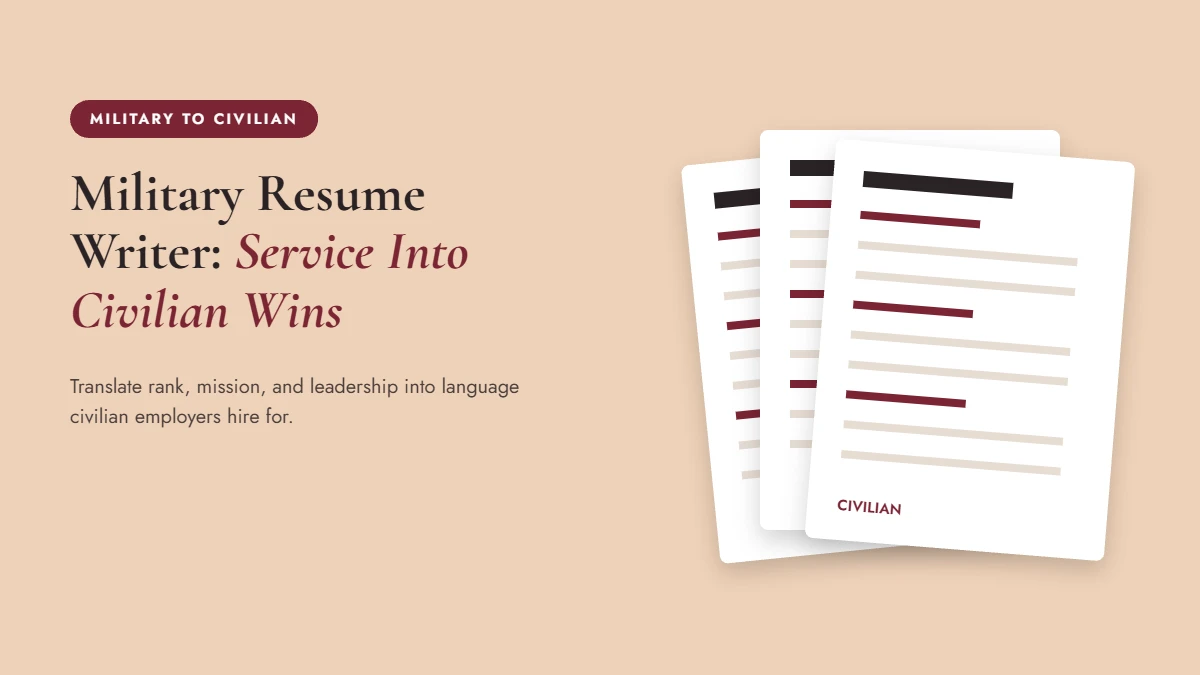
How do you turn years of service into a resume a civilian hiring manager understands? A military resume writer translates mission, rank, and leadership into business language. The key is replacing jargon with plain-language scope and outcomes, so employers see the leader, operator, and problem-solver you already are.
It’s a challenge I see often, especially in Colorado, home to a large military community around Colorado Springs and beyond. The skills are absolutely there. They just need translating.
Why Military Resumes Get Overlooked
Civilian recruiters may not know what a platoon sergeant or an MOS means. When the resume is full of acronyms, they can’t see the scope of what you managed. That’s a translation problem, not a talent problem.
Six Mistakes on Military-to-Civilian Resumes
1. Using acronyms and military jargon
Spell it out, or better, replace it with what it means in civilian terms.
2. Listing duties instead of outcomes
Show results: equipment readiness, safety records, budgets managed, people trained.
If you only remember one thing: translate scope, not just titles.
- “Led 40 personnel and $5M in equipment” means more to a civilian than a rank alone.
- Numbers and outcomes cross the military-civilian gap.
3. Underselling leadership
Military leaders often manage more people and resources earlier than their civilian peers. Say so.
4. Including everything
Focus on what’s relevant to the target role. Trim the rest.
5. Skipping the target
“Any job that uses my skills” isn’t a target. Choose roles and tailor. A general resume gets you generally nothing.
6. Ignoring LinkedIn
Civilian recruiters will look you up. Use my LinkedIn checklist.
RULE: If a civilian can’t understand it in five seconds, rewrite it.
Want to see how your service reads to a civilian recruiter? Get a free resume review.
A Translation Example
Here’s an illustrative before-and-after (a composite, placeholder numbers):
Military style: “PLT SGT responsible for 32 Soldiers and all assigned equipment; ensured mission readiness IAW unit SOPs.”
Civilian style: “Operations leader for a 32-person team; managed equipment worth several million dollars and maintained full readiness through rigorous maintenance and training programs.”
Notice how the civilian version keeps the scope and adds results. More in how to write powerful resume bullets and how to write a career change resume.
Where Military Experience Fits
Operations, logistics, program management, security, IT, and training roles are common fits. The Occupational Outlook Handbook is great for exploring civilian roles and what they require. SHRM’s recruiting resources explain how civilian employers hire, and the LinkedIn Talent Blog shows how recruiters search.
If you’re also considering federal roles, my guide to how federal resumes differ is useful. And if you’re in Colorado, see my Denver job market guide.
How I Help Veterans
My resume writing service includes military-to-civilian transitions. Resumes range from $199 to $599 depending on experience (see rates). For interview prep, see when to get interview help.
Frequently Asked Questions
What does a military resume writer do?
A military resume writer translates your service experience, including leadership, operations, logistics, and technical skills, into civilian terms, and builds a resume tailored to the roles you’re targeting.
How do I translate military experience to a civilian resume?
Replace acronyms and military titles with plain-language equivalents, describe the scope of your responsibility, and focus on outcomes civilian employers value, like efficiency, safety, budget, and team leadership.
Should I include my rank on a civilian resume?
You can, but pair it with a civilian-friendly description of your responsibilities. Many hiring managers won’t know what a rank means in terms of scope.
What civilian jobs fit military experience?
Common fits include operations, logistics, project and program management, security, IT, training, and leadership roles, depending on your specialty.
Is there job search help for veterans?
Yes. Many organizations and programs support veterans. Professional resume writers and coaches can also help with translation and strategy.
How long should a military-to-civilian resume be?
Usually one to two pages, focused on the most relevant and recent experience.
Should I list every award?
List the ones that show results or leadership, with a short explanation of what they recognized.
Do you work with veterans?
Yes. I help military professionals transition to civilian careers by translating military language into terms civilian hiring managers understand.
Your Service Counts. Let’s Make It Read That Way.
You’ve led, delivered, and solved problems under pressure. Let’s make sure civilian employers see it. Get a free resume review, and I’ll show you where to start.