How do you write a resume for a job you’ve never done? That’s the question at the heart of every career change resume. The answer: you don’t hide your past; you translate it. Lead with a clear target, write a summary that bridges where you’ve been and where you’re going, and rewrite your experience in the language of the new industry, using results that matter there.
A quick definition: a career change resume is a resume written to move you into a different role or industry, where you don’t yet have a direct track record. Its job is to help a hiring manager picture you in the new role. Every line should make that easier.
Why Doesn’t My Current Resume Work for a New Industry?
Because it was written for your old audience. It uses your current field’s jargon, highlights achievements that matter there, and is organized around a career path you’re leaving. A recruiter in your target industry reads it and sees someone who belongs somewhere else. I explain the bigger strategy in how to position yourself for a new field.
What Should Go at the Top of a Career Change Resume?
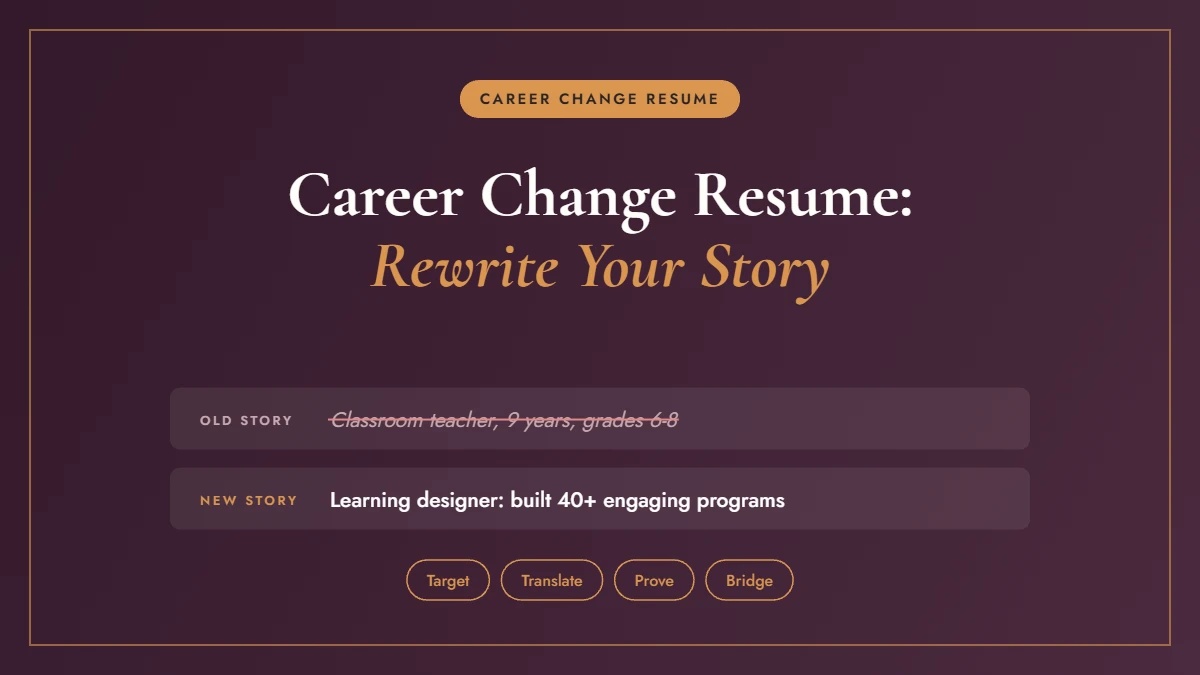
Your target title and a bridge summary. The title tells the reader what you’re applying for. The summary connects your background to that goal. Here’s an illustrative example (a composite):
Before: “Dedicated middle school teacher with nine years of experience creating a positive classroom environment.”
After: “Learning Experience Designer | Former educator who has designed and delivered 40+ engaging programs for diverse learners. Skilled in curriculum design, assessment, and turning complex topics into clear, measurable learning outcomes.”
More on this in how to write a resume summary that gets interviews.
RULE: Write for the job you want, in the language of the people hiring for it. If they wouldn’t use a word, neither should your resume.
How Do I Translate My Experience?
Take each bullet and ask: what result would a hiring manager in my new field care about? Here are illustrative before-and-after rewrites:
Before (hospitality): “Managed front desk operations for a 200-room hotel.”
After (operations): “Ran daily operations for a 200-room property, coordinating a team of 12 and reducing check-in wait times by streamlining handoffs between departments.”
Before (sales): “Exceeded quota for 3 consecutive years.”
After (customer success): “Built long-term relationships with 60+ accounts, consistently exceeding targets by understanding client goals and solving problems before renewal.”
The facts didn’t change. The framing did. That’s the core of writing powerful resume bullets. The STAR method is a helpful way to uncover these results.
Not sure how your experience translates? Get a free resume review and I’ll show you where to start.
Should I Use a Functional Resume?
Usually not. Functional resumes group skills and hide dates, and many recruiters see that as a red flag. A hybrid works better: a strong summary and key skills section, followed by reverse-chronological experience reframed for the new direction. Keep it clean and ATS-friendly; here’s resume formatting for 2026.
How Do I Show I’m Serious About the New Field?
- Training: relevant courses or certifications.
- Projects: freelance, volunteer, or internal work in the new area.
- Community: professional associations, events, or networks.
- Keywords: the new field’s terms, used honestly; see my resume keywords guide.
The Occupational Outlook Handbook is a great way to learn how your target role is described and what training is typical. Harvard Business Review’s career planning articles offer thoughtful reading on reinvention, and the LinkedIn Talent Blog shows how recruiters evaluate candidates.
What Comes After the Resume?
A career change resume works best alongside networking, because referrals help recruiters take a chance on a nontraditional background. If you’re making a bigger life transition, see my plans for a career change at 40 and career change at 50. When you’re ready for professional help, my resume writing service starts with a conversation about where you’re headed.
Frequently Asked Questions
How do I write a resume for a career change?
Start with a clear target title, write a summary that bridges your past and your new direction, translate your experience into the new field’s language, and lead with transferable results. Add relevant training or projects to show commitment.
Should I use a functional resume for a career change?
Usually not. Many recruiters distrust functional resumes because they hide timelines. A hybrid approach, with a strong skills-based summary followed by reverse-chronological experience, tends to work better.
How do I show transferable skills on my resume?
Show them through results, not lists. Rewrite bullets so they highlight outcomes the new field cares about, using that field’s vocabulary.
Do I need a resume writer for a career change?
Not always, but career change resumes are among the hardest to write because you’re translating your experience. A professional can help you see which parts of your background matter most to the new industry.
Should I include unrelated experience on a career change resume?
Include it, but reframe it. Focus on the parts of each role that support your new direction and trim details that don’t.
The short version
- Lead with your target title and a bridge summary.
- Translate every bullet into the new field’s language and priorities.
- Skip the functional format; use a hybrid instead.
- Show commitment with training, projects, and community.
Let’s Translate Your Story
You’ve built real skills. Your resume just needs to say so in a new language. Send it over for a free resume review, and I’ll show you the five changes that will help a new industry see your potential.