Picture a project manager with twelve years of solid experience, applying to a role at a mission-driven nonprofit. The posting says “cover letter required.” She pastes in the same letter she’s sent to 40 other companies, swaps the company name, and hits submit. Silence. Her resume was fine. Her letter just never answered the question the hiring manager was really asking: why you, and why here?
That’s the short answer to whether a cover letter writing service is worth it: it pays off when your letter has to explain something your resume can’t, like a career change, a gap, a relocation, or a jump to a bigger role. If you’re applying for similar jobs in your own field, a well-built template you tailor yourself is usually enough.
A cover letter, in case it’s been a while, is the one-page letter that goes alongside your resume. Your resume proves what you’ve done. Your cover letter connects those dots to this job at this company. A cover letter writing service is a professional (or a company) who writes that letter with you, usually as part of a broader resume and cover letter writing service.
What a Professional Cover Letter Writer Actually Does
A good cover letter writer doesn’t just make your sentences prettier. (If that’s all you’re paying for, keep your money.) The real work happens before any writing starts:
- Finding your through-line. What’s the one story that makes you the obvious fit? For career changers, this is everything.
- Choosing proof. Picking the two or three results that matter most to this employer, not the ten you’re proudest of.
- Handling the awkward parts. Gaps, pivots, layoffs, relocations, and “why are you leaving?” all need a calm, confident sentence, not a paragraph of apology.
- Building a reusable base. You should walk away with a letter you can adapt in ten minutes, not a one-off you’re afraid to touch.
If you’d rather write it yourself, I’ve shared my own approach in cover letters that actually get read and a broader guide to writing a cover letter. This post is about the other question: when is it smarter to hand it off?
Five Cover Letter Myths That Cost People Interviews
Most of the cover letters I see aren’t bad because people can’t write. They’re bad because people believe one of these.
Myth 1: “Nobody reads cover letters anymore.”
Reality: Some recruiters skip them. Plenty of hiring managers don’t, especially at smaller organizations, in competitive roles, and anywhere the posting explicitly asks for one. Here’s the math I give my clients: a letter that gets skipped costs you nothing. A missing letter when one was expected can quietly knock you out. The recruiting guidance SHRM publishes for employers is a good reminder of how much hiring varies from one organization to the next. You can’t assume your letter won’t be read.
Myth 2: “A cover letter is just my resume in paragraph form.”
Reality: If your letter repeats your resume, the reader has now read the same thing twice and learned nothing new. Your letter should answer the questions a resume can’t: Why this company? Why now? Why does your slightly unusual path make you more valuable, not less?
Myth 3: “One good letter works for every application.”
Reality: A strong base letter is smart. A copy-pasted letter is obvious. At minimum, your opening and one proof point should change every time, the same way you need to tailor your resume to each job description. This takes ten minutes once your base letter is solid. It takes forever if it isn’t.
If you only remember one thing: a cover letter’s job is to answer “why you, and why here?” in a way your resume can’t.
- If your resume already answers that clearly, keep the letter short.
- If it doesn’t (career change, gap, new industry, big step up), the letter is where you win or lose the interview.
Myth 4: “If someone else writes it, it won’t sound like me.”
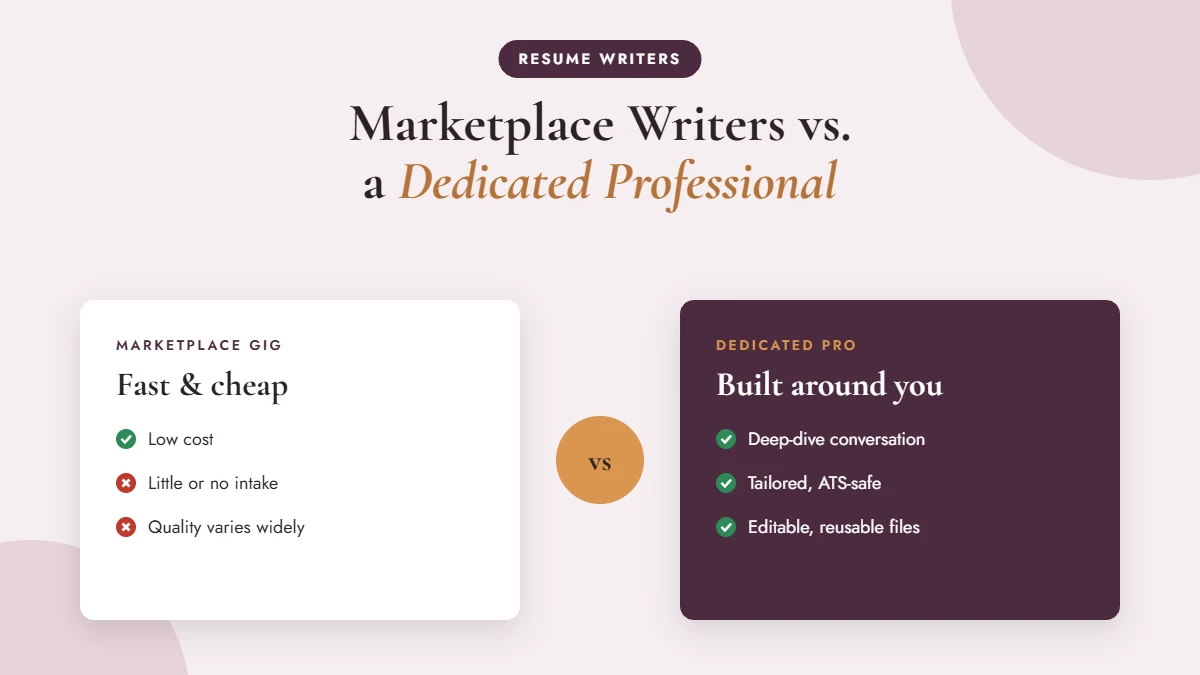
Reality: That’s true of template mills, and it’s a fair worry. A good writer interviews you first and writes in your voice, so the letter sounds like you on your best, most articulate day. If you read a draft and think “I would never say that,” it’s not done yet.
Myth 5: “AI can write it just as well.”
Reality: AI tools are useful for job-search writing, and I’m not here to scold you for using them. But AI writes the average of every cover letter it’s ever seen, which is exactly the problem. Hiring managers are reading a lot of letters that open with “I am excited to apply for…” and close with “I look forward to the opportunity.” Use AI for a rough draft if it gets you moving. Then replace every generic sentence with something only you could say.
Not sure whether your current letter (or the resume underneath it) is helping or hurting? Upload it for a free 5-point resume review. I’ll tell you the five things I’d change first. No call, no pitch.
When a Cover Letter Writing Service Is Worth the Money
Here’s how I’d decide, if I were in your shoes:
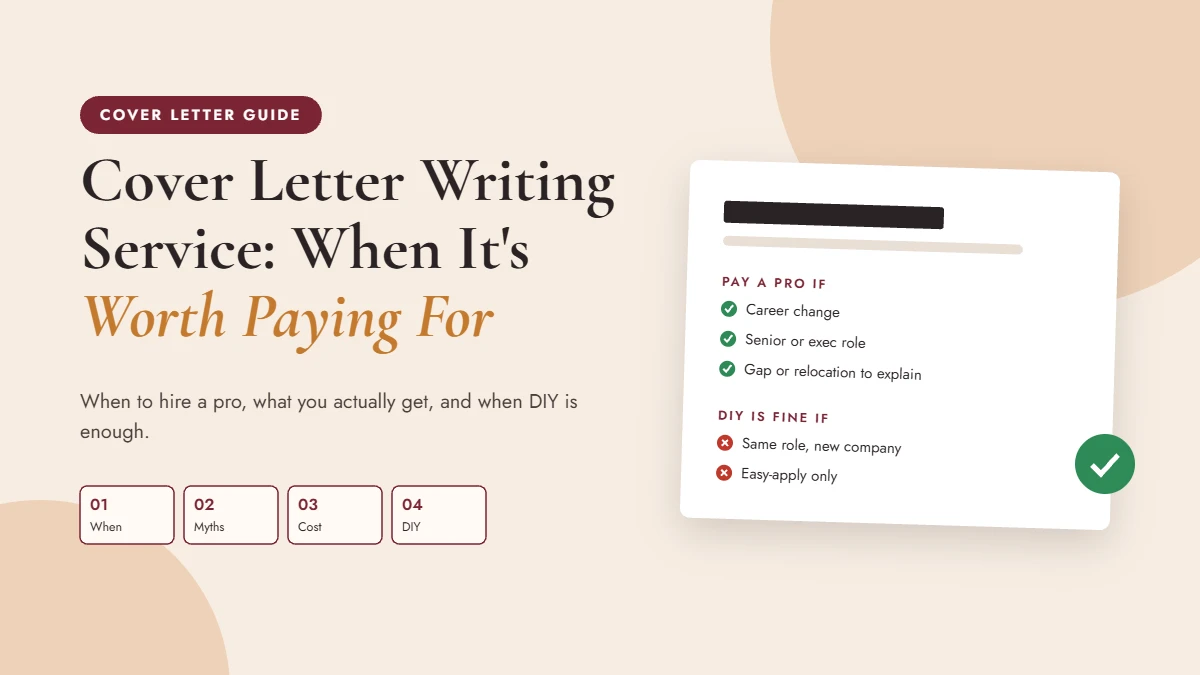
| Your situation | DIY with a template | Hire a professional |
|---|---|---|
| Same role, same industry, new company | Usually enough | Optional |
| Changing careers or industries | Hard to get right alone | Worth it |
| Explaining a gap, layoff, or relocation | Risky | Worth it |
| Stepping up to director, VP, or executive | Possible, but stakes are high | Worth it |
| Mass “easy apply” applications | Fine (or skip the letter) | Not worth it |
| A dream job you’ll only get one shot at | Possible | Worth it |
Notice the pattern: the more your story needs explaining, the more a professional earns their fee. Career changers in particular tend to undersell themselves, which is why positioning yourself for a new field is a skill in its own right.
What You Get When You Work With Me
I’ll be transparent about how I work, because you deserve to know what you’re paying for before you pay for it.
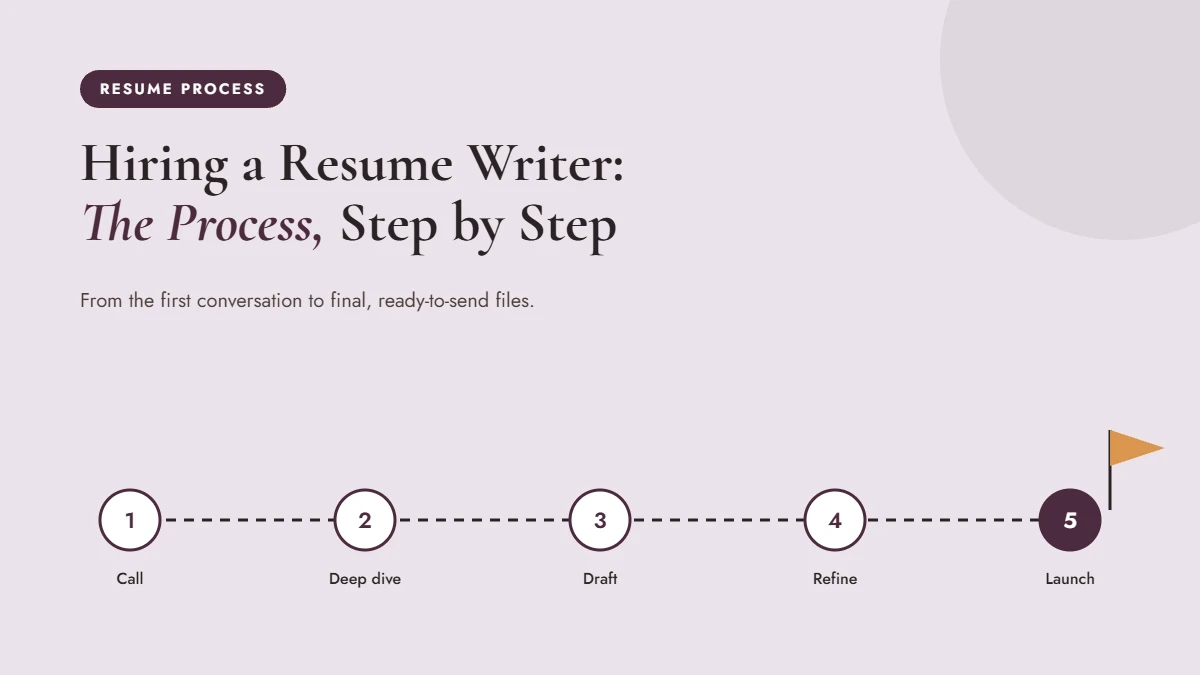
- A conversation first. We talk about where you’ve been, where you’re going, and the specific roles you’re targeting. This is where the real story usually surfaces.
- A base letter built around your strongest case. Written in your voice, structured so you can tailor it quickly.
- Revisions until it sounds like you. Not like me, and definitely not like a robot.
- Guidance on tailoring. I’ll show you exactly which lines to change for each application, so the letter keeps working long after we’re done.
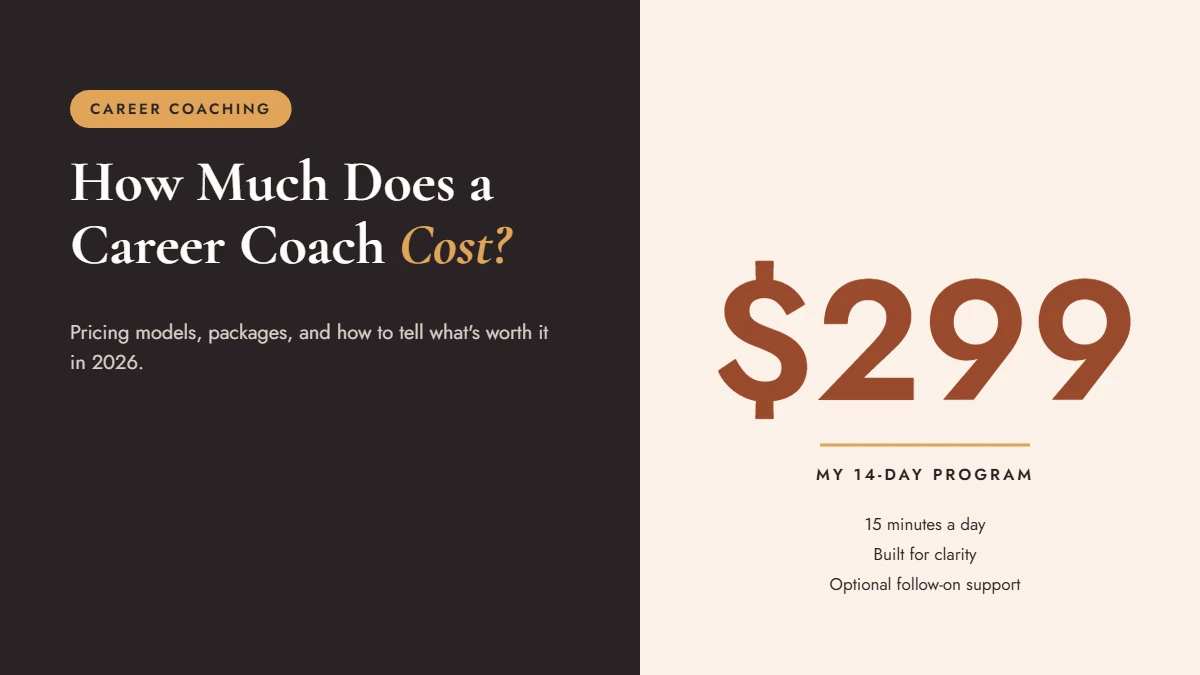
A cover letter on its own is $149. Most clients pair it with a resume ($199 to $599 depending on career level), because the two should tell the same story. You can see everything on my rates page. First drafts typically arrive in as little as three days. If you’re on a deadline, my On-the-Spot session gets your resume, LinkedIn, and cover letter handled together in two focused hours.
Curious what the rest of the process looks like? Here’s what a professional resume writer actually does from first call to final file.
“Kyla was amazing. She is clearly an expert at resume writing. She not only asked great questions, but she also listened and empathized – rare in my experience.”
— Kevin Orsi, Google review
How to Spot a Cover Letter Service That Isn’t Worth It
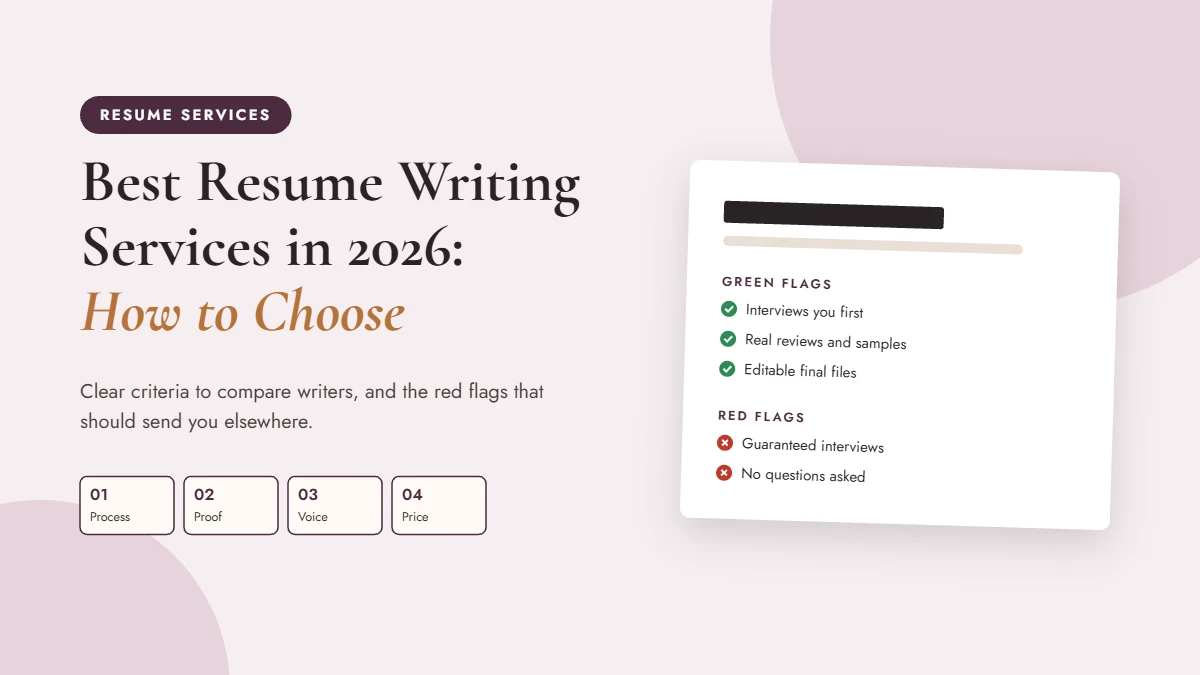
Not every service earns its fee. Before you pay anyone (including me), check for these:
- No questions asked. If they can write your letter from your resume alone, they’re writing a template.
- Guarantees of interviews or jobs. Nobody can honestly promise that. I’ve written about how to avoid resume and career-service scams if you want the full list of red flags.
- No samples or no reviews. A real writer can show you their work and point you to real clients.
- A finished letter you can’t edit. You need a document you can adapt, not a locked PDF.
And one tip that costs nothing: research the role before anyone writes a word. The Occupational Outlook Handbook from the U.S. Bureau of Labor Statistics is a surprisingly useful place to see how a role is typically described, which helps you speak the employer’s language. For bigger-picture thinking about where you’re headed, Harvard Business Review’s career planning articles are worth a browse.
Questions I Get Asked a Lot
Is a cover letter writing service worth it?
It is worth it when your cover letter has to do something your resume can’t, such as explain a career change, an employment gap, a relocation, or a step up in level. If you’re applying for similar roles in your own field, a strong template you customize yourself is usually enough.
How much does a professional cover letter writer cost?
Prices vary widely across the industry, from inexpensive template services to premium executive packages. At my practice, a cover letter is $149, and it’s often paired with a resume, which runs $199 to $599 depending on career level.
Do recruiters still read cover letters?
Not every recruiter reads every cover letter, but many hiring managers do, especially for competitive roles, smaller companies, and positions where the posting asks for one. A letter that’s skipped costs you nothing; a missing letter when one was expected can cost you the interview.
Can I use one cover letter for every job?
You can reuse a strong base letter, but the opening and at least one proof point should change for each application. Hiring managers can spot a generic letter in the first two sentences.
Should I use AI to write my cover letter?
AI can help you get past a blank page, but it tends to produce polished, interchangeable letters that sound like everyone else’s. Use it for a rough draft if you like, then rewrite it with your own specific results and your real reason for wanting the role.
How long should a cover letter be?
Aim for three to four short paragraphs, roughly 250 to 400 words. Long enough to make one clear case, short enough to read in under a minute.
Let’s Make Your Letter Do Its Job
If you’re changing direction, explaining a gap, or going after a role that really matters, your cover letter is carrying more weight than you think. Start with the foundation: send me your resume for a free resume review, and I’ll show you the five things I’d fix first, including whether you need a professional cover letter at all. Sometimes the honest answer is no, and I’ll tell you that too.
When you’re ready for more, take a look at all resume services by career stage, and we’ll build a resume and cover letter that tell the same confident story.