A LinkedIn profile makeover rewrites your headline, About section, experience descriptions, and skills list, and often addresses your photo and banner the goal is a profile that reads specifically about you rather than generically about your job title. “Makeover” and “optimization” largely describe the same service; “makeover” just implies a more complete overhaul rather than a light touch-up.
What “Makeover” Actually Means (vs. “Optimization”)
These terms get used somewhat interchangeably in the market, and for good reason they describe largely the same underlying work. I’ve written a full breakdown of what a LinkedIn profile optimization service typically includes, and everything there applies here too. “Makeover” tends to imply a bigger, more visible transformation useful marketing language for a profile that’s badly out of date, versus “optimization,” which can sound like a lighter tune-up of something already reasonably solid.
In practice, ask any provider what’s actually included rather than relying on which word they use. The label matters less than the scope.
What Changes, Section by Section
Headline
Before: “Account Manager at Regional Insurance Group”
After: “Account Manager | Commercial Insurance & Client Retention | Helping Mid-Size Businesses Reduce Risk”
The before version tells you where someone works. The after version tells you what they specialize in and who they help and gives a recruiter searching “commercial insurance” or “client retention” an actual reason to find this profile.
About Section
This is usually the section with the most dramatic transformation, since most people either leave it blank or write something stiff and third-person. A rewritten About section shifts to a natural first-person voice that still reads as professional not a resume paragraph pasted into a different format.
Experience Descriptions
Before, most profiles list a title and company with no description underneath, or copy-paste resume bullets verbatim. After, each relevant role gets two or three lines of specific, results-oriented description enough to reinforce the story without repeating the resume word for word.
Skills Section
Before often means either a maxed-out, unfocused list or an untouched default. After means a curated list built around actual career stage and target roles, with the three most important skills deliberately pinned rather than left to whatever LinkedIn defaulted to.
Photo and Banner
Not every makeover includes new photography, but a good one should at least flag whether your current photo is helping or hurting you, and whether your banner image is doing any work or sitting there as unused default space.
Custom URL
A small detail, but a common one to fix: cleaning up a long, number-filled default URL into something short and professional takes minutes and immediately looks more polished.
Two More Real Before-and-After Examples
A Career Changer
Before (headline): “Operations Coordinator”
After (headline): “Operations Professional Transitioning to Project Management | Process Improvement & Cross-Team Coordination”
The after version does real work for someone pivoting careers: it names the transition explicitly and leads with transferable skills, rather than leaving a recruiter to guess how an Operations Coordinator background connects to project management.
An Early-Career Profile
Before (About section, first line): “I am a recent graduate looking for opportunities in marketing.”
After (About section, first line): “During my marketing internship at a 40-person startup, I grew our Instagram engagement 60% in one semester and I’m looking for my first full-time role to keep building on that.”
Same person, same actual experience. The second version leads with a specific result instead of a generic statement of intent, which is a far stronger opening line for anyone reading past the first sentence.
An Executive Profile
Before (About section, first line): “Experienced operations leader with over 15 years in the manufacturing industry.”
After (About section, first line): “I lead operational transformations for mid-market manufacturers most recently improving EBITDA margin by 6 points while integrating two acquisitions.”
The before version is accurate but forgettable it could describe hundreds of people. The after version leads with a specific, quantified result that signals exactly the kind of organizational impact a board member or search partner is scanning for.
What a Makeover Can’t Fix
It’s worth being honest about the limits here.
A makeover can’t invent accomplishments you don’t have. It can help you find and articulate real ones you’ve stopped noticing this happens constantly, since it’s genuinely hard to see your own work objectively but the underlying substance still has to exist.
It won’t fix a networking or outreach problem on its own. A great profile still needs to actually reach people, whether through search visibility or your own activity on the platform. If nobody’s looking, even a perfect profile sits quietly unseen.
It can’t guarantee recruiter messages or job offers. No legitimate provider can promise an outcome that depends on factors outside their control hiring demand in your field, timing, and dozens of other variables no rewrite can touch.
A Word About Before/After Marketing
Before/after comparisons are common marketing material in this industry, and it’s worth understanding why they work as persuasion even when they’re honest. A dramatic transformation is memorable and easy to evaluate at a glance, which makes it a natural thing for providers to showcase, including me in this very post.
The risk is treating a single before/after example as a guarantee of your own results. Someone whose profile was genuinely neglected for a decade will see a more dramatic transformation than someone whose profile was already reasonably solid. Both outcomes can represent good work they’re just not directly comparable to each other.
How Long Does a Makeover Take?
Most makeovers follow a similar arc: a real discovery conversation, a first draft within a few business days, and a revision round before final delivery. Total timelines vary by provider, but a rushed process that skips the discovery conversation is more concerning than a slightly longer timeline that includes one.
Do You Need a Light Refresh or a Full Makeover?
Not everyone needs the complete version.
| Signal | Likely Need |
| Profile is mostly current, just feels a bit stale | Light refresh |
| Recently changed roles or industries | Full makeover |
| Getting profile views but zero messages | Full makeover something in the content isn’t converting |
| Profile hasn’t been touched in 5+ years | Full makeover |
| Just want a stronger photo and headline | Light refresh may be enough |
If you’re still deciding whether to hire anyone at all, the DIY-versus-professional breakdown covers that decision in more depth, and how to vet a LinkedIn profile writer walks through what to look for once you’ve decided to hire someone.
How I Approach a Makeover
Every makeover starts with a real conversation about your goals, not a quick scan of your existing profile. I also pay attention to how many skills actually belong on the page and the overall structure covered in a genuinely healthy LinkedIn profile, so nothing gets missed in the rewrite.
If you’re preparing for a makeover session with any provider, it helps to have a few things ready ahead of time: your current resume, a sense of the roles or industries you’re targeting next, and honestly, a few minutes to think about what you’re proudest of in your recent work. That last part sounds simple, but it’s often the hardest question to answer about yourself, and it’s exactly what a good discovery conversation is designed to draw out.
Why This Actually Matters
This isn’t just about looking polished. LinkedIn’s own guidance consistently shows that complete, keyword-rich profiles get meaningfully more recruiter engagement than incomplete or generic ones.
On the hiring side, SHRM, the leading professional association for HR and talent-acquisition practitioners, has noted that recruiters rely heavily on LinkedIn as a primary sourcing tool, meaning your profile is doing outreach work on your behalf even when you’re not actively applying anywhere.
General guidance from Indeed’s Career Guide reinforces the same point: a current, complete profile is treated as baseline professional practice now, not an optional extra.
Frequently Asked Questions
How different will my profile actually look after a makeover?
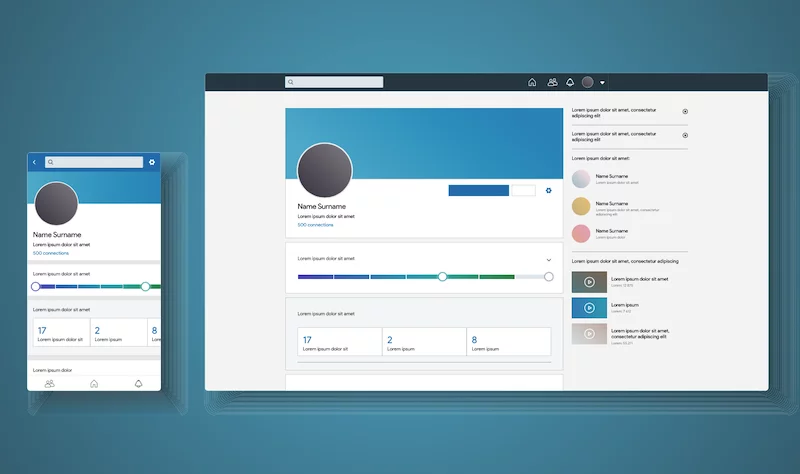
The visual layout stays largely the same, since that’s controlled by LinkedIn’s platform, not your provider. What changes dramatically is the content headline, About section, experience descriptions, and skills.
Can I keep parts of my current profile I like?
Yes. A good makeover process should ask what’s working before rewriting everything, rather than assuming a total overhaul is always necessary.
Will a makeover change my connections or endorsements?
No. Your existing network, endorsements, and recommendations stay intact. A makeover addresses the content you control directly, not your accumulated activity on the platform.
How often should I get a full makeover versus a smaller update?
A full makeover typically makes sense around a major career transition a new industry, a significant promotion, or a long-overdue update. Smaller refreshes can happen more frequently as your role evolves.
Is a makeover worth it if I’m not job searching right now?
Often yes. A strong profile works passively in the background, and updating it without time pressure tends to produce better results than a rushed version during an active search.
Do makeovers include LinkedIn headline testing or analytics?
Not typically. Most makeovers focus on the written content itself rather than ongoing performance tracking, though some providers may offer guidance on what to watch afterward.
What if I’ve had a makeover before and it didn’t help?
It’s worth examining what specifically didn’t change was the writing still generic, was the wrong headline emphasized, or was the real issue outreach and visibility rather than content? That diagnosis should shape what a second attempt focuses on.
How do I know if the before/after examples a provider shows me are representative?
Ask what a more modest transformation looks like, not just their most dramatic example. Every provider showcases their best work; a provider willing to also describe a smaller, more typical update is usually being more transparent about what to actually expect.
Ready to See What Changes for You?
If your profile has been quietly falling behind your actual career, a makeover is usually a fast, worthwhile fix. I’m Kyla Duffy, and my LinkedIn profile optimization services start with a real conversation about your goals, not a copy-paste of your resume. Curious what it costs? My rates are posted publicly, and my FAQ page covers what people usually ask first.