Myth: “Creative work and a good paycheck don’t go together.” I hear it constantly from talented designers, writers, photographers, and makers who’ve accepted underpayment as the price of doing work they love. It doesn’t have to be.
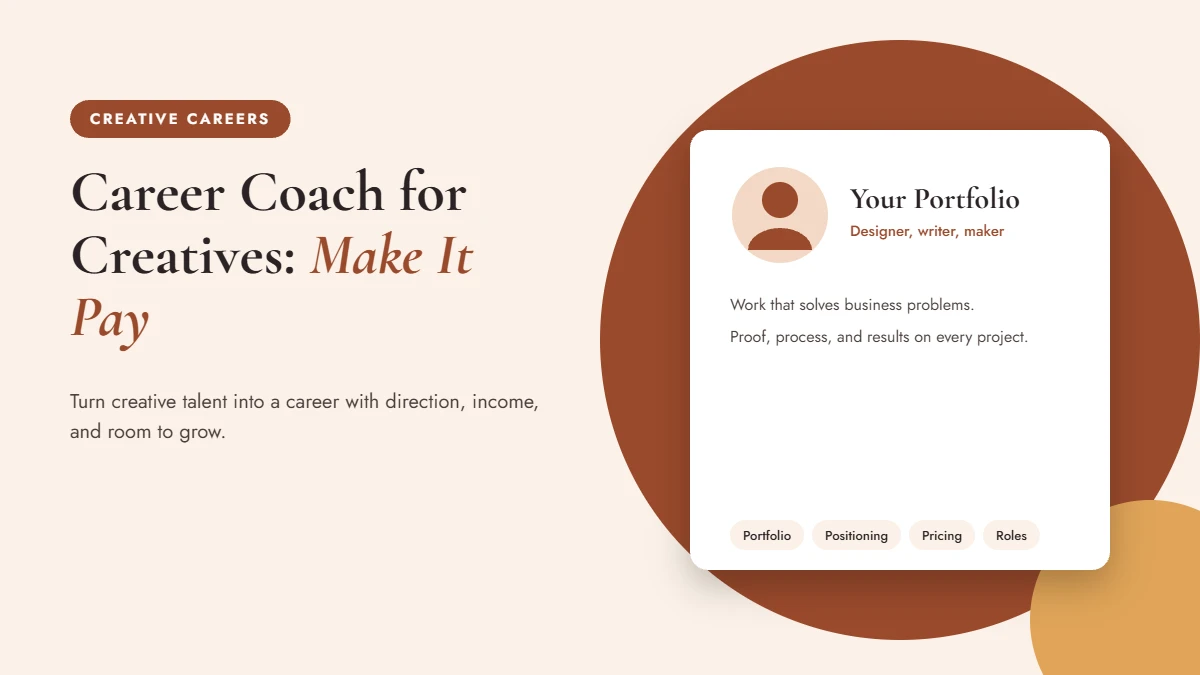
A career coach for creatives helps you change that. The creatives who build careers that pay well position their work as solving business problems, curate their portfolios for specific roles, and choose a path (in-house, agency, freelance, or a mix) on purpose.
Key takeaways
- Position creative work by the problems it solves.
- Curate your portfolio for the roles you want.
- Choose in-house, agency, freelance, or a mix intentionally.
- Your resume still needs to be clear and ATS-friendly.
Six Mistakes That Keep Creatives Underpaid
1. Showing work without context
A beautiful image without a story is decoration. A case study with a problem, process, and result is proof.
2. Including everything in the portfolio
Curate. Five strong, relevant projects beat thirty random ones.
3. Writing a resume like a mood board
Heavy design can break applicant tracking systems. Keep the resume clean and let the portfolio carry the visuals; here’s why graphics in resumes often backfire, and when a designed resume does make sense.
4. Undervaluing your skills
Creative skills (communication, storytelling, visual thinking) are business skills. Talk about them that way.
5. Drifting instead of choosing
Taking whatever comes is understandable early on. Long-term, choosing a direction helps you grow faster.
6. Going it alone
Creatives often work solo. A coach adds structure, accountability, and an outside view.
Ready to turn your creative work into a career that supports you? Book a free consultation and let’s map your options.
From Creative Output to Business Impact: An Example
Here’s an illustrative before-and-after for a designer’s resume bullet (a composite):
Before: “Designed social media graphics and marketing materials.”
After: “Redesigned the brand’s social templates and campaign visuals, helping lift engagement and cutting production time for the marketing team.”
More on this in how to write powerful resume bullets.
Your summary should frame you the same way; here’s how to write a resume summary that gets interviews, and if you’re pivoting, see how to write a career change resume.
Choosing Your Path
| Path | Pros | Trade-offs |
|---|---|---|
| In-house | Stability, team, benefits | Less variety |
| Agency | Variety, fast learning | Pace and deadlines |
| Freelance | Flexibility, control | Income variability |
| Hybrid | Stability plus creative freedom | Time management |
If you freelance on the side, here’s how to talk about a side hustle when job hunting. And when you’re ready to stand out, these out-of-the-box ways to get noticed by employers suit creatives especially well.
The Occupational Outlook Handbook covers many creative occupations and their pay, Harvard Business Review’s career planning articles are helpful, and the LinkedIn Talent Blog shows how recruiters search for creative talent.
How I Coach Creatives
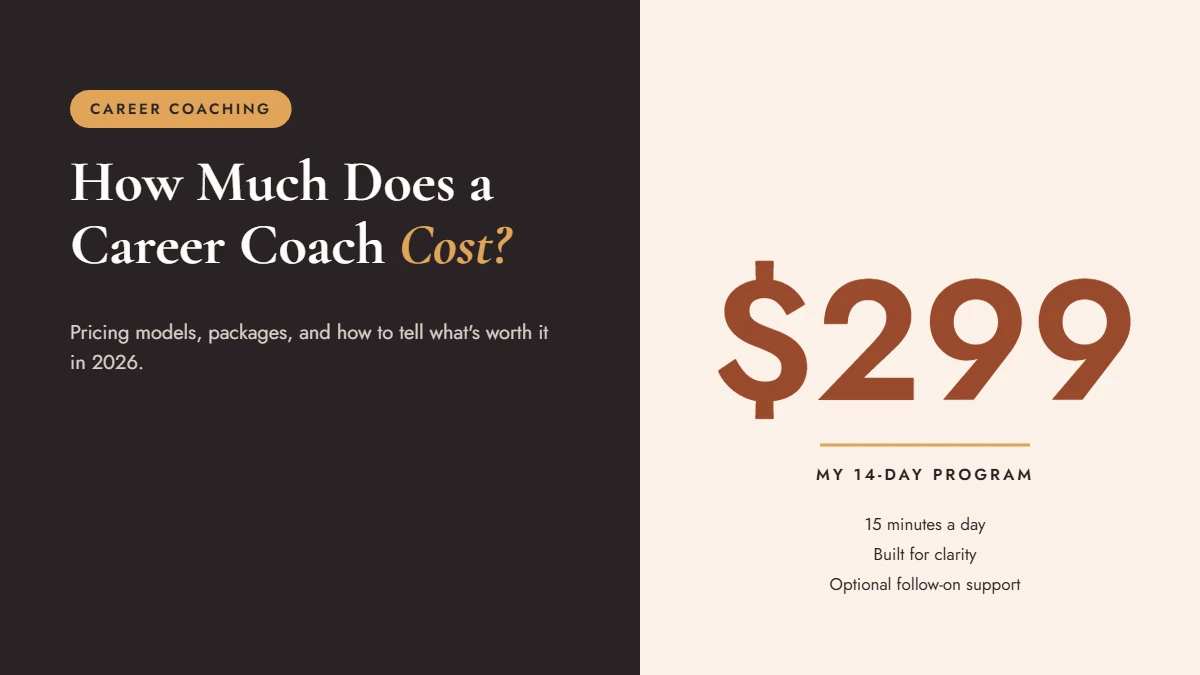
My career coaching starts with a 14-day “Find Your Path” challenge ($299). From there we can tackle your resume, LinkedIn (start with my LinkedIn checklist), and interview prep. See rates.
Quick Answers to Common Questions
What does a career coach for creatives do?
A creative career coach helps designers, writers, artists, and other creatives clarify direction, position their portfolio, explore in-house, agency, or freelance paths, and build materials and strategy that lead to paid work.
Can creatives have stable careers?
Yes. Many creatives build stable careers in-house, at agencies, or as freelancers with a mix of clients. The key is aligning your skills with roles and markets that pay for them.
How should creatives write a resume?
Lead with a clear target role, highlight results and business impact of your creative work, and link to a focused portfolio. Keep the resume clean and ATS-friendly even if your portfolio is visual.
Should my portfolio include everything I’ve made?
No. Curate it for the roles you want. A focused portfolio with case studies beats a large, unfocused one.
Is freelancing or in-house better for creatives?
It depends on your priorities. In-house roles offer stability and team collaboration; freelancing offers variety and flexibility. Many creatives do both at different stages.
How do creatives show results?
Describe the problem, your creative solution, and what changed: engagement, sales, sign-ups, awards, or feedback.
How do I price creative work?
Research market rates in your field and level, consider the value you deliver, and adjust as you build a track record.
How much does career coaching cost?
Pricing varies across the industry. My career coaching starts with a 14-day ‘Find Your Path’ challenge for $299.
Make Your Creativity Pay
Your creative work has value. Let’s build a career that reflects it. Book a free consultation and tell me where you want your work to take you.